
Common garage door sounds include grinding, rattling, squeaking, banging, humming, and clicking, and each one points to a different part of the system that may need attention soon. Learning to identify these differences ahead of time saves real time and unnecessary confusion during any later garage door service appointment.
Distinguishing one sound from another takes practice, especially since several different parts can produce a similar noise under the right conditions and level of wear. This guide breaks down each sound individually, linking it to the part most likely responsible and what usually comes next.
Key Takeaways
- Grinding sounds usually point to worn rollers or dry moving parts
- A loud bang often signals a broken spring or snapped cable
- Rattling typically comes from loose hardware or mounting brackets
- Squeaking points to a lack of lubrication on hinges or rollers
- Humming or straining suggests the opener is working harder than normal
Types of Sounds a Garage Door Can Make
Six distinct sounds account for most noise complaints, and the exact timing of each one often reveals more about the cause than the sound itself.
Sound Type | When It Typically Occurs | What It Usually Means |
Grinding | During the full opening or closing cycle | Worn rollers or lack of lubrication |
Loud bang | A sudden, isolated moment during operation | Broken spring or snapped cable |
Rattling | Consistently throughout every cycle | Loose hardware or mounting brackets |
Squeaking | Most noticeable when the door first moves | Dry hinges or rollers needing lubricant |
Humming | While the opener runs but the door barely moves | Strain on the motor or drive system |
Clicking | Right before or after the door starts moving | Opener relay or worn gear issues |
To understand what drives each of these sounds at a deeper level, read our guide on What Causes a Noisy Garage Door?, which breaks down the root cause behind every entry in this table and what typically happens if it goes unaddressed.
Grinding Sound
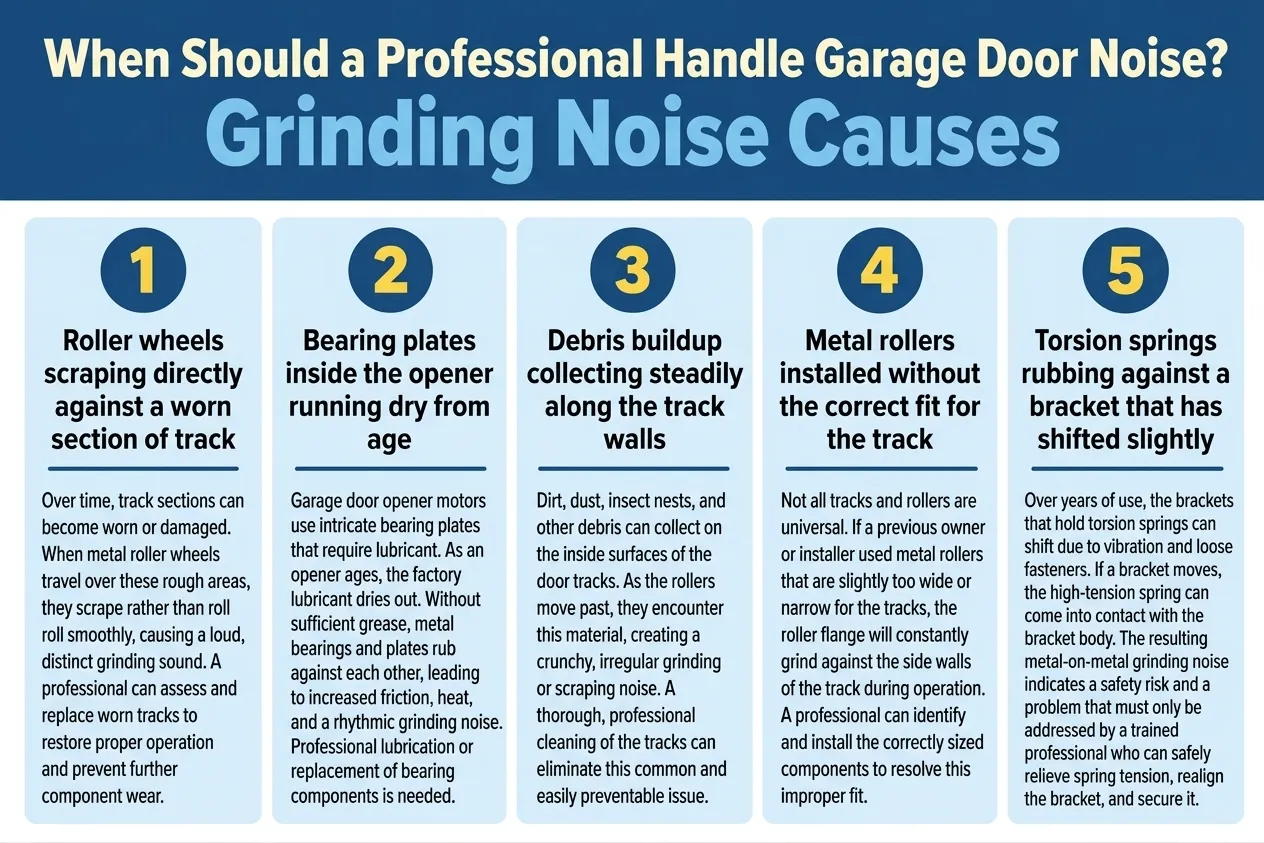
Metal parts rubbing together without enough lubrication or proper spacing usually produce a persistent grinding sound heard throughout most of the cycle.
Tracing this sound back to its source often points to:
- Roller wheels scraping directly against a worn section of track
- Bearing plates inside the opener running dry from age
- Debris buildup collecting steadily along the track walls
- Metal rollers installed without the correct fit for the track
- Torsion springs rubbing against a bracket that has shifted slightly
Scheduling an early garage door repair visit usually resolves this quickly, before worn parts damage the surrounding track and rollers.
Loud Bang
A sudden break, not gradual wear, almost always explains a sharp, unexpected bang heard during a normal operating cycle.
Sounds like this one are typically connected to:
- Years of accumulated tension causing a torsion spring to snap
- Cable separation from the drum during a routine cycle
- Sustained high tension causing a support bracket to fail
- Small objects briefly caught inside the moving track
- Uneven spring tension releasing all at once mid-cycle
Pausing door use immediately and scheduling a full inspection with a trained technician helps prevent further damage before the door runs again.
Rattling
Loose components, not fully worn parts, typically explain a persistent rattling noise heard throughout most of the door’s operating cycle.
Tracking down this kind of noise usually leads to:
- Bolts or screws that gradually loosened from repeated vibration
- Mounting brackets vibrating against the surrounding frame
- A broken garage door spring shifting slightly inside its housing
- Loose chain slapping repeatedly against the opener rail
- Original installation hardware that was never fully tightened
Addressing loose hardware early keeps a minor rattle from causing a larger structural issue, protecting the track and rollers from added strain over time.
Squeaking
Friction between two metal parts that should move smoothly against each other almost always produces a high-pitched squeak during operation.
Narrowing down this sound generally points to:
- Hinges that have never received any lubrication
- Rollers that lost their factory-applied coating over time
- White lithium grease that dried out and wore away
- Rust forming steadily on exposed metal parts
- Age causing lubricant to break down faster than expected
To find the right lubrication technique for resolving this sound completely, read our guide on How to Troubleshoot a Noisy Garage Door at Home, which walks through the proper process step by step and what to expect.
Humming or Straining
An opener working harder than it should during a routine cycle typically produces a low humming or straining sound worth investigating.
Sounds like this one often connect back to:
- An unbalanced door forcing the motor to work overtime
- Belt drive slippage happening under normal operating tension
- Aging motor components losing their original efficiency
- A spring nearing the end of its expected lifespan
- Track obstructions adding resistance throughout the full cycle
Scheduling garage door opener repairs early prevents the motor from straining toward a complete and costly failure later on.
Clicking or Clunking
A mechanical issue inside the opener unit, not the door itself, typically explains a clicking or clunking noise during operation.
Investigating this noise usually reveals:
- A worn gear inside the opener housing
- A relay switch that struggles to engage properly
- Loose chain links catching against the surrounding housing
- Bearing plates that have shifted slightly out of position
- Age gradually wearing down internal opener components
Addressing this sound quickly protects the opener from a far more serious and costly failure and extends the life of the entire drive system.
What to Do After Identifying the Sound?
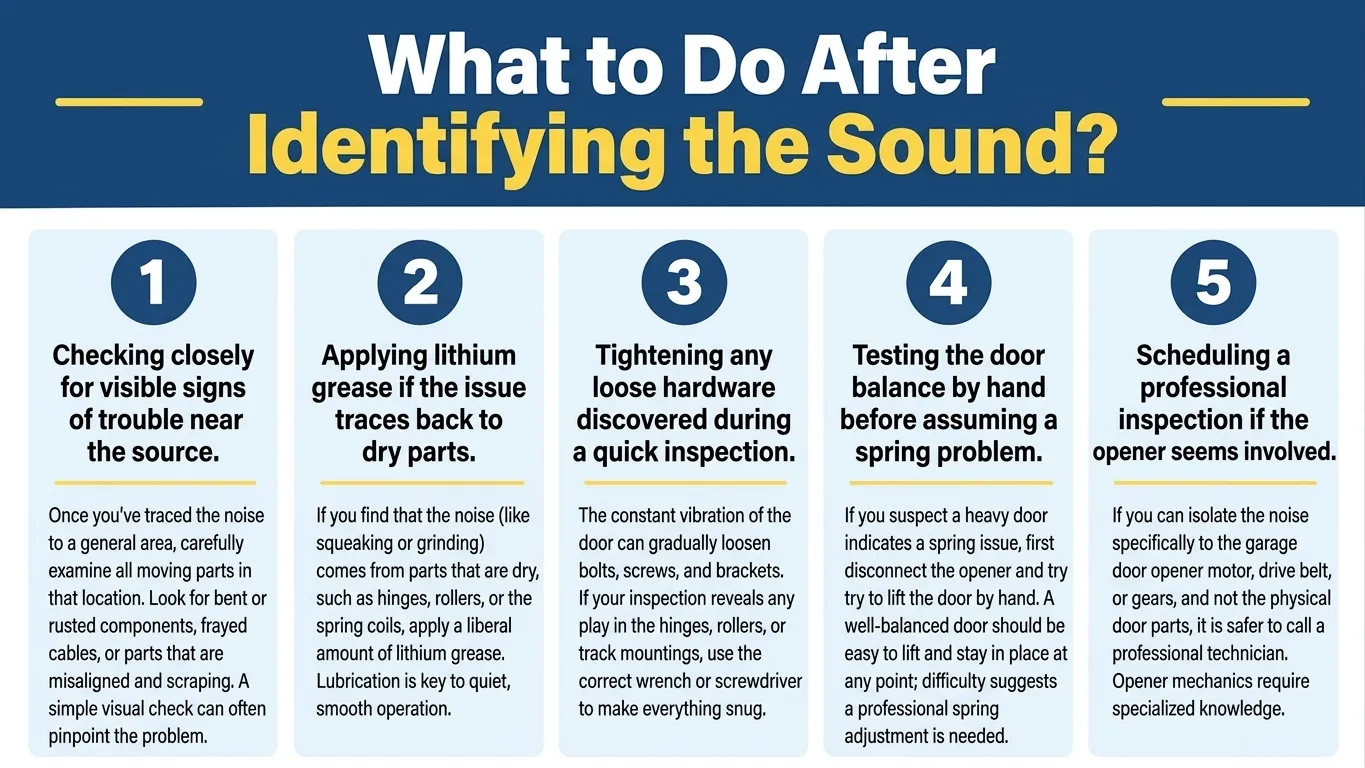
Pinpointing the exact sound narrows the next step considerably, whether that means a simple fix or a scheduled professional visit.
Steps worth taking once the sound is identified include:
- Checking closely for visible signs of trouble near the source
- Applying lithium grease if the issue traces back to dry parts
- Tightening any loose hardware discovered during a quick inspection
- Testing the door balance by hand before assuming a spring problem
- Scheduling a professional inspection if the opener seems involved
To find out exactly when this kind of noise calls for expert help, read our guide on When Does a Noisy Garage Door Need a Professional?, which explains the signs that go beyond a simple home fix.
Identifying the Sound Is the First Step Toward a Quiet Garage Door
Learning to tell these sounds apart turns a confusing noise into a clear, actionable next step for the whole household, no matter what’s causing it. Addressing the issue early protects the door, the opener, and the overall system from a much more serious repair later, saving both time and money.
Affordable Garage Door Repairs of Indianapolis, LLC helps residents across Indianapolis, IN, identify the exact cause behind an unusual sound before it becomes a bigger, costlier problem. Contact us or give us a call today, and let our team restore quiet operation with a full inspection.