
A noisy garage door needs a professional once the sound points to a broken spring, a failing opener, or structural damage that goes well beyond a simple home fix to correct. Telling this line apart early protects both the household and the equipment from further, more expensive damage overall.
Sudden loud bangs or extreme tension felt during a manual test often signal a risk of serious injury rather than a routine repair worth attempting alone. This guide walks through the specific situations that call for garage door service from a trained technician instead of continued troubleshooting at home.
Key Takeaways
- A loud bang usually signals a broken spring or snapped cable
- Persistent noise after a home fix often points to a deeper issue
- Bent tracks or structural misalignment require professional tools
- Extreme tension during a balance test signals a real safety risk
- Opener or drive system failure often needs specialized repair
Signs a Noisy Garage Door Needs Professional Attention
Distinguishing a routine noise from a genuine safety concern often comes down to how the sound behaves and what part it involves.
Warning Sign | What It Suggests | How Professional Service Helps |
Sudden loud bang | Broken spring or snapped cable | Safely replaces the failed component under controlled tension |
Persistent noise after a fix | Deeper mechanical issue | Identifies the root cause a home fix missed |
Bent tracks | Structural misalignment | Realigns or replaces damaged sections properly |
Extreme tension | Spring or cable under dangerous load | Releases tension safely with the right tools |
Opener failure | Motor or drive system breakdown | Diagnoses and repairs the exact failing part |
Spring-related noise | Any tension-related component issue | Handles high-tension components without injury risk |
Choosing professional service at this stage resolves the underlying issue directly and permanently, rather than treating only the symptom each time it appears.
A Loud Bang or Sudden Snap
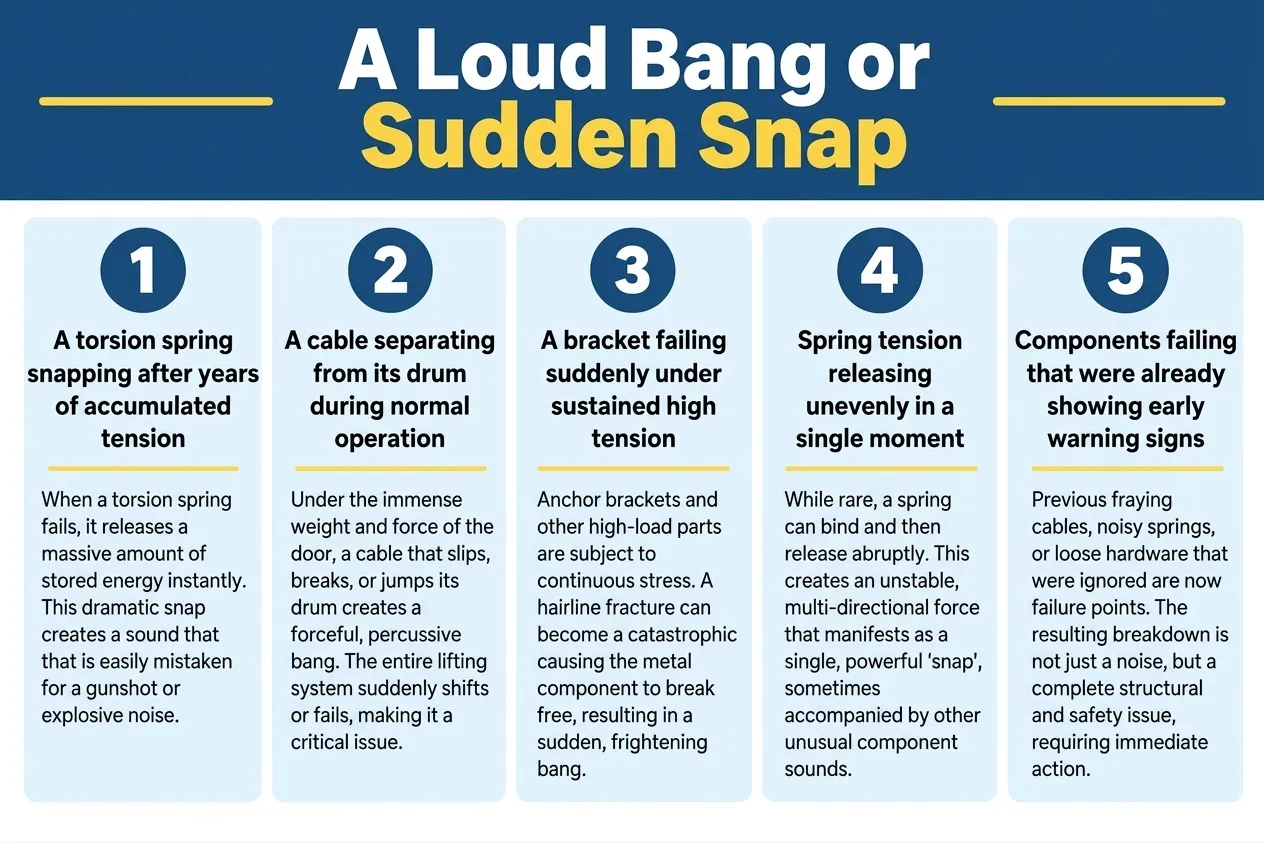
A sudden, sharp bang almost always signals a component breaking under tension rather than wearing down gradually over months or years.
This kind of sound typically points to:
- A torsion spring snapping after years of accumulated tension
- A cable separating from its drum during normal operation
- A bracket failing suddenly under sustained high tension
- Spring tension releasing unevenly in a single moment
- Components failing that were already showing early warning signs
To understand what typically causes this kind of sudden failure, read our guide on What Causes a Noisy Garage Door?, which explains how tension builds toward this exact moment over time and what usually happens next.
Persistent Noise That Returns After a Home Fix
Noise that returns despite tightened hardware or fresh lubricant usually points to an issue beyond what a home fix can resolve on its own.
This pattern typically suggests:
- A worn part that was never actually replaced during troubleshooting
- Torsion springs losing tension in a way that a home fix cannot correct
- Bearing plates inside the opener continuing to wear down
- Track alignment issues that basic tightening cannot fully solve
- A drive system component nearing the end of its expected lifespan
Repeated troubleshooting rarely finds what a proper garage door repair inspection uncovers in a single, thorough visit with the right tools.
Visible Bent Tracks or Structural Misalignment
Bent tracks or visibly misaligned rails almost always require tools and expertise that go well beyond a basic home inspection alone.
This kind of damage typically results from:
- An impact from a vehicle or object striking the track directly
- Age gradually shifting the track out of its original position
- Lag screws loosening from the ceiling joists over time
- Repeated stress from an unbalanced door pulling the track
- Structural settling affecting the surrounding frame over time
To connect a sound like grinding or rattling back to this kind of damage, read our guide on Common Sounds a Garage Door Makes and What They Mean, which breaks down each noise type in more detail than covered here.
Extreme Tension Felt During a Balance Test
Extreme resistance felt while manually testing door balance usually signals dangerous tension that a home fix should never address directly.
This level of tension typically involves:
- A broken garage door spring carrying dangerously uneven load
- Cables under far more strain than a properly balanced door requires
- Ball bearings inside the spring assembly under excessive pressure
- A door that resists movement well beyond normal resistance levels
- Components nearing failure under sustained, high tension
Testing balance is safe, but addressing what the test reveals belongs entirely to a trained technician with the right equipment and experience.
Opener or Drive System Failure
A failing opener or drive system produces noise that home troubleshooting rarely resolves on a lasting basis, no matter how many attempts are made.
This kind of failure typically shows up as:
- A belt drive or chain drive that has stretched beyond repair
- Motor components straining audibly under normal operating load
- Bearing plates inside the opener wearing down completely
- A drive system that struggles to complete a full cycle
- Opener issues that recur despite basic lubrication or tightening
Scheduling a professional garage door opener repair service promptly prevents a partial failure from becoming a complete breakdown later.
Any Situation Involving Spring Tension
Spring tension carries enough stored energy to cause serious injury, making it one of the clearest lines between a home fix and professional work.
This category always includes:
- Torsion springs showing any sign of wear or visible damage
- Cables under tension that appear frayed or stretched
- Extreme tension discovered during a manual balance test
- Any noise directly traced back to the spring assembly
- Situations where the exact tension level remains unknown
To find out which specific troubleshooting steps are safe to attempt at home before this point, read our guide on How to Troubleshoot a Noisy Garage Door at Home, which draws a clear line between safe fixes and professional-only repairs.
What Happens During a Professional Inspection?
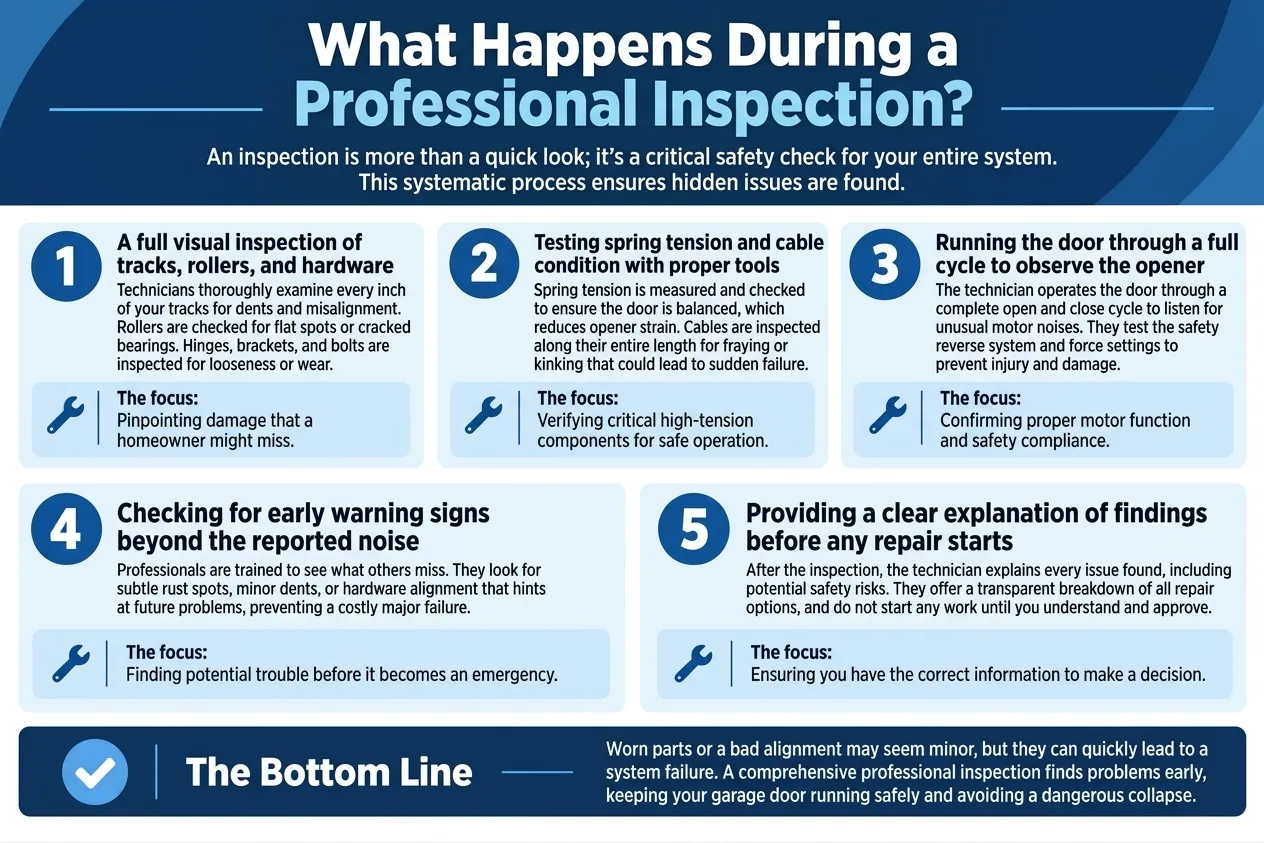
A professional inspection typically moves through several stages designed to confirm the exact cause before any repair work begins.
This process usually includes:
- A full visual inspection of tracks, rollers, and hardware
- Testing spring tension and cable condition with proper tools
- Running the door through a full cycle to observe the opener
- Checking for early warning signs beyond the reported noise
- Providing a clear explanation of findings before any repair starts
Professional expertise at this stage often identifies small problems well before they turn into larger, costlier repairs for the entire household.
Knowing When to Call a Professional Protects the Whole System
Telling the difference between a simple fix and a genuine safety concern protects both the household and the equipment involved in daily use, especially once a spring or opener component is involved. Acting on the right signal at exactly the right time often prevents a moderate issue from becoming a costly, drawn-out repair.
Affordable Garage Door Repairs of Indianapolis, LLC provides residents across Indianapolis, IN, with the professional expertise needed once a noise crosses that line. Contact us or give us a call today, and let our team resolve the issue safely, completely, and without unnecessary delay.