
Loose hardware, worn rollers, and insufficient lubrication on moving parts rank among the top causes of a noisy garage door, and each adds strain that can eventually require a professional garage door service visit. Small problems like these often lead to costly repairs once torsion springs or bearing plates start absorbing the extra tension.
Grinding sounds, loud bangs, and persistent rattles each point to a different source of the noise, and learning the difference saves time during any later inspection. Identifying the pattern early, before the noise issues spread to other moving parts, helps prevent a minor issue from causing a full opener failure.
Key Takeaways
- Loose hardware and worn rollers rank among the most common causes
- Lack of lubrication on moving parts often creates a grinding sound
- An unbalanced garage door places extra strain on the opener
- Track alignment issues can cause a persistent rattle during operation
- Addressing noise early helps avoid more serious repair costs later
Common Types of Garage Door Noise
Different sounds point to different problems, and identifying the pattern correctly narrows down the repair before a technician ever arrives.
Noise Type | When It Typically Occurs | Likely Cause |
Grinding sound | During the full opening or closing cycle | Lack of lubrication or worn rollers |
Loud bang | A sudden, isolated moment during operation | Broken spring or snapped cable |
Rattling | Consistently throughout every cycle | Loose hardware or mounting brackets |
Squeaking | Most noticeable when the door first moves | Dry rollers or hinges needing lubricant |
Grinding chain | Coming directly from the opener unit | Loose chain or worn drive system parts |
To understand each of these sounds in more depth, read our guide on Common Sounds a Garage Door Makes and What They Mean, which breaks down every noise type, its likely cause, and what typically happens if it goes unaddressed.
Most Common Causes of a Noisy Garage Door
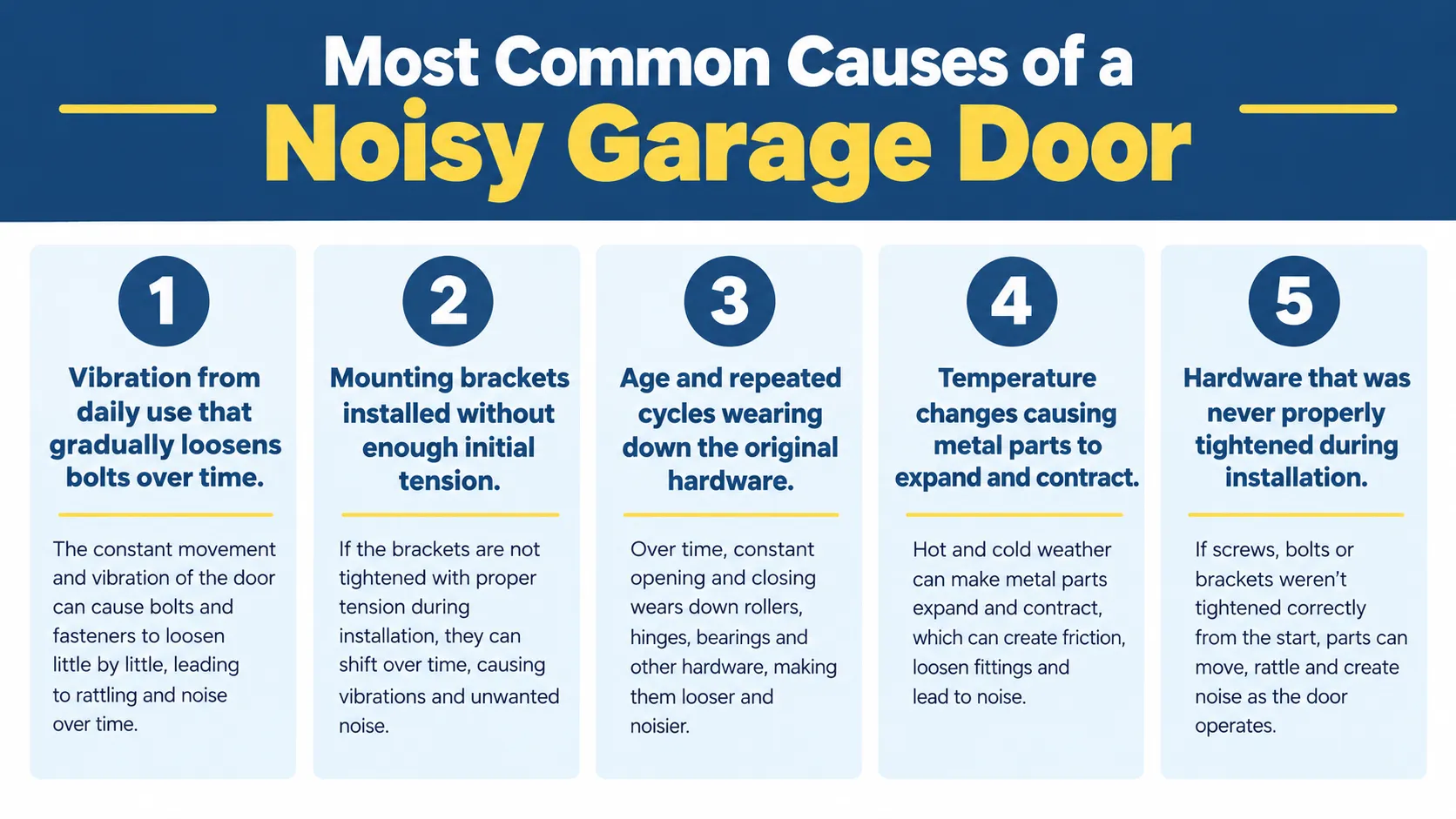
Loose Hardware and Mounting Brackets
Bolts and mounting brackets can work loose over time from repeated use on a busy residential garage door.
Loose hardware is typically caused by:
- Vibration from daily use that gradually loosens bolts over time
- Mounting brackets installed without enough initial tension
- Age and repeated cycles wearing down the original hardware
- Temperature changes causing metal parts to expand and contract
- Hardware that was never properly tightened during installation
Tightening these bolts with a socket set often resolves the noise entirely, without extra parts or a full opener inspection.
Worn or Damaged Rollers
Nylon and steel rollers wear down over time, and a worn roller creates one of the most recognizable sounds of daily use.
Worn rollers are typically caused by:
- Years of friction against the track wearing down the roller surface
- Lack of lubrication accelerating wear on metal rollers
- Flat spots forming from the door resting in one position too long
- Debris or rust building up inside the roller brackets
- Age causing the roller material to crack or become brittle
A garage door repair technician can replace worn rollers with metal rollers or nylon versions, depending on the noise level the household prefers.
Lack of Proper Lubrication
Moving parts left without lubricant for too long start producing a dry, high-pitched sound during daily use.
A lack of lubrication is typically caused by:
- Garage door lubricant that was never applied in the first place
- Less maintenance performed than the door actually needs
- Weather exposure drying out lubricant faster than expected
- Dust and debris absorbing lubricant meant for the moving parts
- Long gaps between scheduled maintenance visits
Applying lithium grease to moving parts on a regular maintenance schedule prevents this noise from returning long term.
An Unbalanced Garage Door
Spring tension that falls out of balance creates uneven strain across the entire opener and track system, often without an obvious warning sign at first.
An unbalanced door is typically caused by:
- Spring tension that has weakened unevenly on one side
- A cable stretching or wearing faster than its matching cable
- Extreme tension building up from a spring nearing the end of its lifespan
- Ball bearings inside the spring assembly wearing down unevenly
- Age gradually shifting the balance without any single dramatic failure
Properly balancing spring tension reduces strain on ball bearings and other moving components, extending the opener’s overall life.
Track Alignment Issues
Bent tracks or misaligned rails force the rollers to grind against the track walls instead of moving smoothly, which often develops gradually rather than all at once.
Track alignment issues are typically caused by:
- Lag screws loosening from the ceiling joists over time
- An impact from a vehicle or object striking the track
- Age causing the track to shift slightly out of position
- Uneven settling of the garage structure itself
- Repeated stress from an unbalanced door pulling the track out of place
Correcting track alignment issues early prevents further damage to the rollers and mounting brackets, keeping the entire system running smoothly for longer.
Opener or Drive System Problems
A worn belt drive or chain drive produces a distinct sound that often points directly to the drive system itself, rather than the door hardware.
Opener issues are typically caused by:
- A belt drive stretching or fraying after years of regular use
- A loose chain that was never properly tensioned
- Bearing plates inside the opener wearing down from age
- Motor components straining under an unbalanced door’s extra weight
- Dust or debris interfering with the drive system’s moving parts
Addressing garage door opener repairs quickly helps maintain quiet operation and avoid a complete failure, protecting the motor from further long-term wear
What Should Be Checked After Hearing These Noises?
Checking a few key areas after noticing an unusual sound often reveals whether the issue is minor or something worth a professional inspection.
Worth checking before scheduling any repair:
- Visible wear or damage on the rollers and tracks
- Loose bolts, brackets, or lag screws along the frame
- Rust or dryness on any of the moving parts
- Balance by disconnecting the opener and testing manually
- Unusual sounds isolated to a specific part of the cycle
Regular garage door maintenance makes this kind of inspection faster, easier, and less likely to miss an early warning sign.
Initial Fixes for a Noisy Garage Door
A handful of simple DIY fixes can resolve many common noise issues directly at home, often without needing a trained technician right away.
Fixes worth trying at home include:
- Tightening loose bolts and brackets with a socket set
- Applying lithium grease to hinges, rollers, and the chain drive
- Wiping down tracks with a damp cloth to remove buildup
- Replacing worn rollers with new nylon or steel versions
- Testing door balance manually before adjusting spring tension
To walk through each of these fixes in more detail, read our guide on How to Troubleshoot a Noisy Garage Door at Home, which covers a practical, step-by-step approach for every common noise type and what to expect along the way.
When Should a Professional Handle Garage Door Noise?
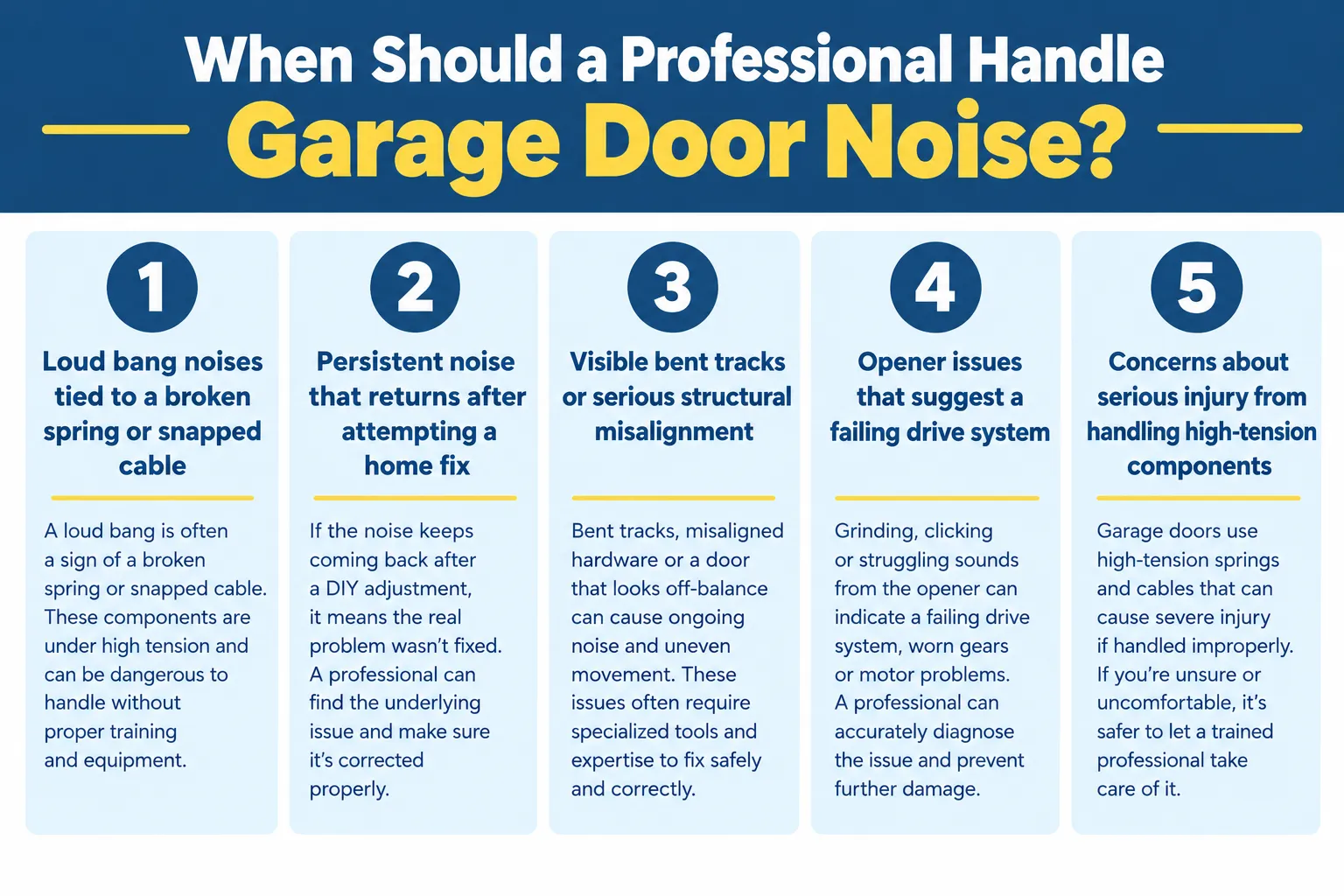
Noise tied to spring tension or opener components often requires professional expertise rather than a home fix, especially when serious injury is a risk.
Signs a trained technician should get involved include:
- Loud bang noises tied to a broken spring or snapped cable
- Persistent noise that returns after attempting a home fix
- Visible bent tracks or serious structural misalignment
- Opener issues that suggest a failing drive system
- Concerns about serious injury from handling high-tension components
To learn exactly when you need a professional inspection, read our guide on When Does a Noisy Garage Door Need a Professional?, which explains the situations that call for expert handling and peace of mind.
Addressing Noise Early Protects the Whole Garage Door System
Identifying the source of a noise early prevents a small issue from causing a larger, more expensive repair for the entire system. Regular attention to the moving parts keeps the door and opener operating quietly for years longer, protecting the investment already made in the home.
Affordable Garage Door Repairs of Indianapolis, LLC helps residents across Indianapolis, IN, track down the exact source of a noisy door before it causes a bigger problem. Contact us or give us a call today, and let our team restore quiet operation with a full inspection and repair.