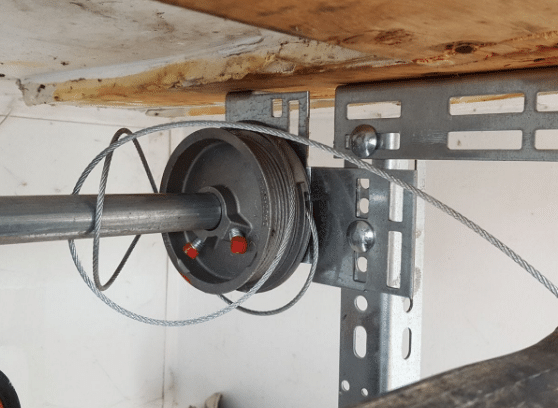
A broken garage door cable is a problem that rarely fixes itself and almost always gets worse when prevention and maintenance are ignored. The steel cables that lift and balance the door are built to last, but they still rely on consistent care to perform properly over time.
Skipping routine inspections is what leads most Indianapolis homeowners to a broken garage door cable, which could have been avoided with proper garage door repair and upkeep. This guide covers every prevention and maintenance step needed to protect the cables and avoid unnecessary breakdowns.
What Causes Garage Door Cables to Break?
Garage door cables fail because specific mechanical and environmental conditions build up over time, gradually wearing them down until the cable can no longer withstand the pressure and stress of daily use.
Common reasons why garage door cables break include:
- The cable frays and weakens after years of repeated opening and closing cycles.
- Rust and corrosion eat away at the cable strands due to exposure to moisture and humidity.
- Unbalanced torsion springs shift the full weight of the door onto the lift cables.
- Poor lubrication creates friction between the cable and the pulley, accelerating wear.
- Misaligned drums force the cable out of position, causing it to grind against metal edges.
- Poor installation leaves the cable under uneven tension from the very beginning.
To understand how these causes lead to visible damage and what can be done about it, read our guide on Broken Garage Door Cable: Signs, Causes, and Repair Options, which breaks down each factor and the available repair options.
Early Signs of a Broken Garage Door Cable You Should Never Ignore
A broken garage door cable rarely fails without warning, and knowing what to look for early prevents a small issue from becoming a full system breakdown.
Common signs that your garage door cable is failing include:
- The door opens unevenly or looks visibly crooked on one side during operation.
- Visible fraying, rust, or slack appears along the cable or near the bottom bracket.
- Loud snapping or popping sounds occur when the door opens or closes.
- The door drops faster than normal when closing, rather than lowering at a controlled pace.
- The garage door opener struggles, stalls, or stops mid-cycle without any clear reason.
- One side of the door sags noticeably lower than the other when the door is in motion.
To determine whether it is still safe to operate your door after noticing these signs, read our guide on Is It Safe to Use a Garage Door With a Broken Cable?, which explains the risks of continued use and why a professional inspection matters.
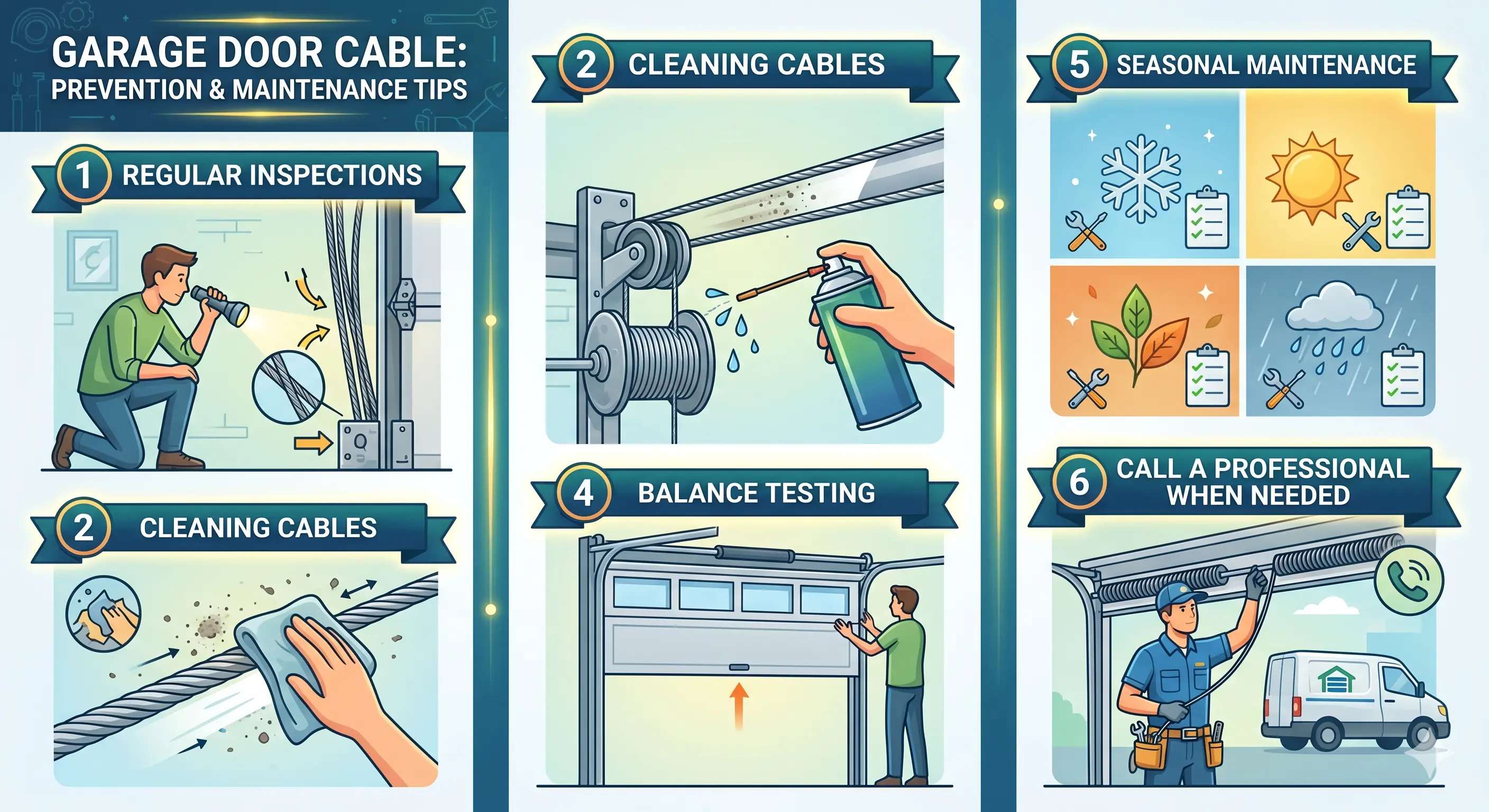
How to Prevent a Broken Garage Door Cable and Keep It Well-Maintained
Regular Inspections
Monthly visual checks give Indianapolis homeowners an early look at cable wear before it develops into a bigger problem.
Regular inspection habits every homeowner should follow include:
- Check both cables monthly while the door is fully closed.
- Fraying means individual wire strands are separating from the main cable body.
- Pay extra attention to the bottom bracket area since it absorbs the most stress.
- Rust, discoloration, or thinning along any section signals early wear.
- Slack or looseness in the cable means it needs professional attention immediately.
- Address any visible damage before operating the door again.
Consistent monthly inspections are one of the simplest habits that help prevent a broken garage door cable from becoming an emergency.
Cleaning Cables
Dirt and debris buildup on garage door cables accelerates wear faster than most homeowners realize.
Keeping cables clean requires attention to a few key areas:
- Use a dry cloth to wipe down the full length of each cable.
- Buildup concentrates most around the drums and bottom bracket.
- Avoid harsh chemicals and water, as moisture accelerates corrosion.
- Greasy residue attracts more dirt, creating a cycle of accelerated wear.
- Clean cables are easier to inspect for fraying, rust, or slack.
- Regular wiping makes a measurable difference in overall cable lifespan.
Regular cleaning paired with routine inspections helps homeowners avoid unnecessary garage door replacement caused by buildup and neglect.
Lubrication
Proper lubrication reduces the friction that quietly wears down garage door cables and the components they work alongside.
Key lubrication practices that protect the cable system include:
- Silicone-based lubricant works best on pulleys and bearing plates.
- The drum cable groove needs lubrication to prevent binding and uneven wear.
- Over-lubricating cables attracts dirt and accelerates wear rather than preventing it.
- Ask a technician whether cables should stay dry or get a light rust-inhibiting application.
- Lubricate more frequently during humid summers in Indianapolis.
- Petroleum-based products break down components and attract grime.
Keeping the right components lubricated on a consistent schedule is one of the most effective ways to extend cable life and reduce friction-related wear.
Balance Testing
An unbalanced garage door places uneven tension on the cables, shortening their lifespan much faster than normal wear would.
The balance testing steps every homeowner can perform include:
- Pull the red emergency release cord to disconnect the opener before testing.
- Lift the door manually to waist height and release it carefully.
- A door that stays in place means the springs are evenly distributing the weight.
- Sliding down or shooting up means the springs are not functioning correctly.
- Faulty springs transfer excess load onto the cables and accelerate fraying.
- Repeat balance testing every few months to monitor spring performance.
Identifying a balance problem early protects the cables from absorbing stress they were never designed to handle on their own.
Seasonal Maintenance
Indianapolis weather puts garage door cables through stress levels that change significantly from one season to the next.
Seasonal maintenance priorities for Indianapolis homeowners include:
- Cold winters make metal cables brittle and prone to snapping.
- Snow and ice accelerate rust on exposed cable surfaces.
- Humid summers create ideal conditions for hardware corrosion.
- Schedule a professional inspection before winter temperatures drop.
- Spring is a practical time for a full system check after cold weather.
- Seasonal visits allow professionals to re-tension, lubricate, and assess cables.
Seasonal garage door maintenance protects cables from the weather patterns Indianapolis homeowners deal with every year.
Call a Professional When Needed
Recognizing when a cable issue goes beyond basic maintenance helps keep a minor problem from becoming a full system failure.
Situations that always require professional garage door repair services include:
- Never leave fraying, rust, or slack unaddressed.
- Cable tension adjustments require specialized tools and training.
- Replacing a snapped cable involves extreme tension and serious hazards.
- Makeshift tools like clamps or pliers create dangerous risks.
- Spring, drum, and pulley repairs always need a trained technician.
- Calling a professional early prevents a manageable repair from escalating.
Professional help protects the entire door system and gives Indianapolis homeowners peace of mind that the job was done correctly.
When Is It Time for Garage Door Cable Repair or Replacement?
Garage door cable repair and replacement serve different purposes, and knowing which one applies saves Indianapolis homeowners from unnecessary costs.
Situation | What It Means | Recommended Action |
Cable slipped off the drum, but was undamaged | Cable is intact, but lost proper positioning | Professional reattachment and re-tensioning |
Minor fraying caught early | Early wear that has not yet compromised the full cable | Immediate inspection and possible repair |
Cable is new with isolated damage | Limited wear confined to one small area | Professional assessment to confirm repair viability |
Cable is fully snapped or severely frayed | Cable has failed and cannot hold tension | Full cable replacement required |
Widespread rust or corrosion along the cable | Metal integrity is compromised throughout | Full cable replacement required |
Cable is several years old with multiple wear signs | Cable has reached the end of its lifespan | Full cable replacement recommended |
Both cables are showing uneven wear | One cable failure puts the other at immediate risk | Replace both cables at the same time |
Damage caused by a failing spring or misaligned drum | Root cause must be fixed alongside the cable | Full replacement, including root cause repair |
To figure out what steps to take immediately after a cable failure, read our guide on Broken Garage Door Cable: What to Do in an Emergency, which walks through how to respond quickly and get the right help without making the situation worse.
Proper Maintenance Is the Best Way to Prevent a Broken Garage Door Cable
Consistent care and routine inspections are what keep garage door cables performing reliably through years of daily use. Indianapolis homeowners who build a maintenance habit protect their cables, door systems, and households from unexpected failures.
Affordable Garage Door Repairs of Indianapolis, LLC proudly serves homeowners across the area with professional garage door cable repair and replacement services. Contact us or give us a call today so our trained technicians can inspect, maintain, or replace your cables and keep your garage door system in top condition.