
Proper care for garage door rollers involves cleaning them, lubricating them on a consistent schedule, and inspecting them regularly for early signs of wear. Ignoring this care does not cause immediate failure, but it wears down the parts that keep a residential garage door moving the way it should over time.
This kind of ongoing care also depends on knowing which specific tasks a homeowner can reasonably handle and which require a trained professional instead. Following a checklist at the correct pace protects the rollers, tracks, and opener, all of which depend on one another to work well together.
Why Is Garage Door Roller Maintenance Important?
Garage door roller maintenance matters because these small parts carry the full weight of the door through every cycle, and neglecting them forces the tracks, hardware, and opener to absorb strain that shortens the life of the whole system.
Common reasons this maintenance carries so much weight include:
- Rollers absorb constant pressure from hundreds of cycles each year
- Dirt and debris inside the track create friction that speeds up roller wear over time
- Lack of lubrication increases resistance within the ball bearings in each roller
- Indianapolis weather swings between humid summers and cold winters, stressing roller materials
- Worn rollers force nearby hardware to compensate, spreading wear across the system
To understand how long garage door rollers are built to last, read our guide on How Long Do Garage Door Rollers Last Before Replacement?, which breaks down the average lifespan homeowners can expect by roller type and usage.
What Does a Garage Door Roller Maintenance Checklist Include?
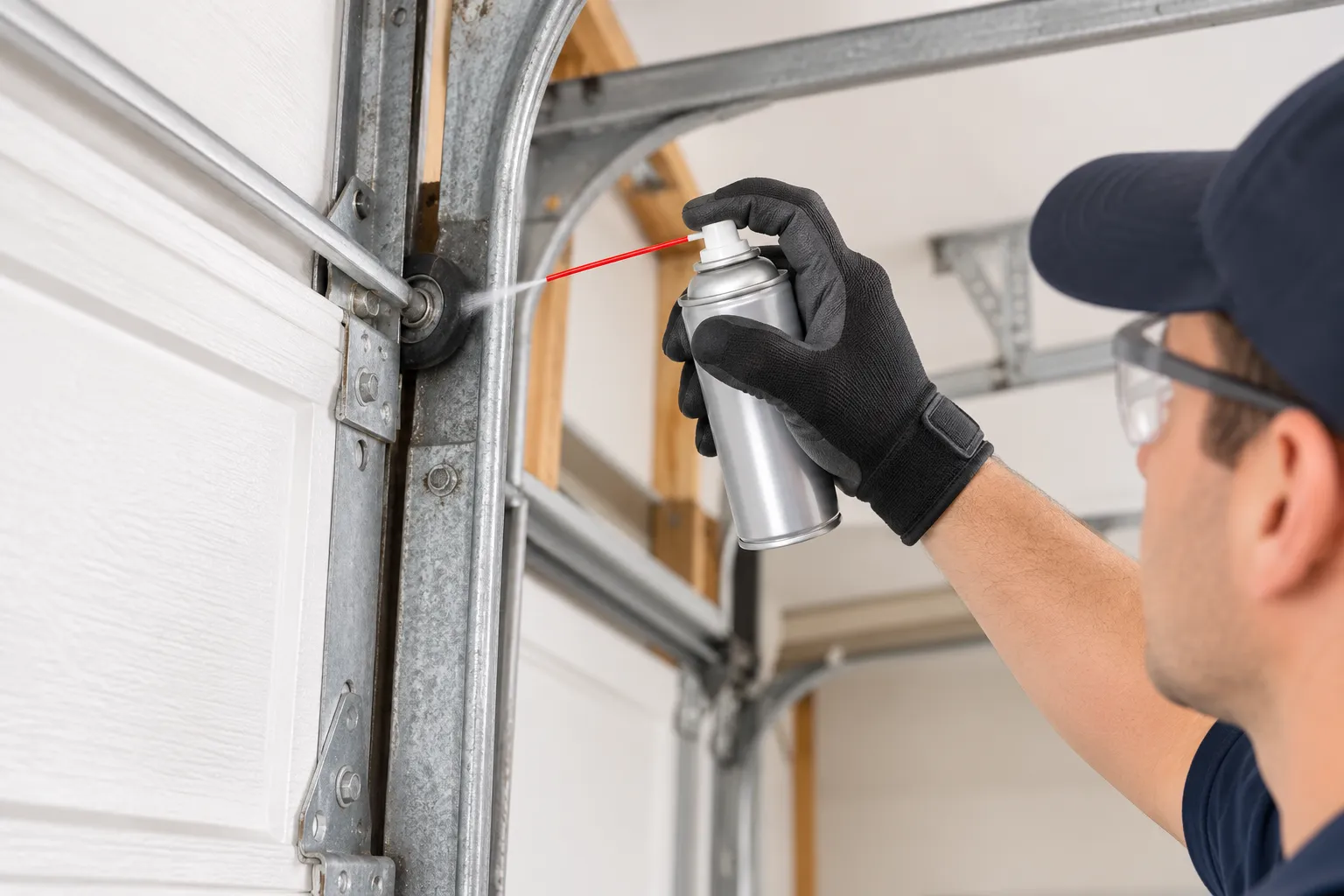
Lubricating the Rollers the Right Way
A lithium or silicone-based lubricant keeps roller bearings moving smoothly, a habit that matters even after a fresh garage door installation.
Steps for lubricating rollers correctly include:
- Cleaning built-up dirt and grime off the rollers and tracks first
- Choosing a lithium or silicone-based product made for garage doors
- Spraying lubricant directly onto the roller bearings rather than the tracks
- Keeping oil and grease off the tracks since they attract debris fast
- Reapplying lubricant on a consistent basis, roughly every six months
Sticking to the correct lubricant and schedule keeps roller bearings quiet and reduces strain on the opener with every cycle.
Inspecting Garage Door Rollers for Wear and Damage
Visible wear on garage door rollers, whether steel or nylon, tends to develop gradually and becomes easier to spot during routine checks.
Signs worth checking for during an inspection include:
- Running a hand along the roller edge to feel for chips or flat spots
- Watching the door move slowly to catch any wobbles or sticking points
- Checking steel rollers closely for surface rust near the axle
- Listening for grinding near the same spot on every cycle
- Marking which roller looks the most worn for future comparison
Comparing rollers side by side during each inspection makes uneven wear patterns much easier to catch early.
Checking Roller Alignment
Alignment problems in garage door rollers often develop slowly, and a roller grinding against the side of its track is usually the first noticeable clue.
Signs to watch for during an alignment check include:
- Looking straight down the track to see if a roller sits off-center
- Noting whether the grinding noise comes from the same spot every time
- Checking for a visible gap between the roller wheel and the track wall
- Watching for the door, hesitating at the same point during each cycle
- Inspecting bracket screws near the noisy section for looseness
A shifted bracket is usually behind these symptoms, and if adjusting it doesn’t help, the issue may call for garage door repair beyond the roller itself.
Tightening Loose Hardware
Vibration over hundreds of yearly cycles gradually loosens the hardware that holds the rollers and brackets in position.
Hardware worth checking regularly includes:
- Bracket bolts that shift slightly when pushed instead of holding firm
- Hinges between panels that flex or click during movement
- Track bolts that have backed out enough to leave visible gaps
- Fasteners near the opener arm loosen from repeated vibration
- Rattling limited to one section, pointing to a specific loose bracket
A single loose bracket often changes how weight travels through the door, so tightening it can noticeably quiet the whole system.
Knowing When Garage Door Rollers Replacement Is Necessary
Garage door rollers replacement typically becomes necessary once a roller is cracked, flattened, or spinning unevenly despite regular care.
Indicators that point toward needing a replacement include:
- Checking whether a roller looks flattened on one side compared to the rest
- Looking closely for rust that has eaten into the roller’s surface
- Watching for a roller that catches or hesitates while spinning
- Isolating which roller a noise is coming from during a slow cycle
- Noting if the door shudders at the same point every time it passes one roller
A roller reaching this point needs more than maintenance, since a full garage door replacement addresses the whole system rather than one part.
How Often Should Garage Door Roller Maintenance Be Done?
Garage door roller maintenance follows a fairly predictable schedule, and sticking to it keeps the rollers, tracks, and hardware working as they should.
Maintenance Task | Recommended Frequency | Why It Matters |
Lubrication | Every 6 months | Keeps bearings moving smoothly and reduces noise |
Visual inspection | Every 3 to 6 months | Catches chips, cracks, or wobbles early |
Alignment check | Once a year | Confirms rollers sit correctly inside the track |
Hardware check | Once a year | Catches bolts and brackets loosened by vibration |
Indianapolis homeowners may want to lean toward the more frequent end of this schedule, since seasonal swings speed up wear.
What Are the Signs That Garage Door Roller Maintenance Didn’t Work?
A door that still struggles after a full maintenance routine usually means an underlying issue needs more attention than upkeep alone can provide.
Signs maintenance hasn’t resolved the issue include:
- Grinding returning within a day or two of fresh lubrication
- A roller still wobbling in the same spot after cleaning and inspection
- The door pulling to one side even after the hardware was tightened
- A new noise appearing in a different section after an alignment check
- Wear on a roller looking worse within weeks rather than months
To recognize what these lingering symptoms usually indicate, read our guide on What Are the Signs of Bad Garage Door Rollers?, which covers the specific warning signs that suggest a roller has reached the end of its usable life.
Is Professional Maintenance Better Than DIY Maintenance?
Basic roller care is a DIY task, but certain situations call for a professional rather than continuing to handle things alone.
Situations better suited for a professional include:
- Rollers connected to cables under tension, especially the bottom rollers
- Alignment issues that keep returning after an adjustment attempt
- Noise or wobbling that persists across multiple maintenance attempts
- A door that seems out of balance, rather than just in need of a roller check
- Garage door rollers repair involving more than a single worn part
To learn what typically causes rollers to wear out between maintenance attempts, read our guide on What Causes Garage Door Rollers to Wear Out Fast?, which breaks down the most common reasons rollers lose strength early.
How Can Professionals Help With Garage Door Roller Care?
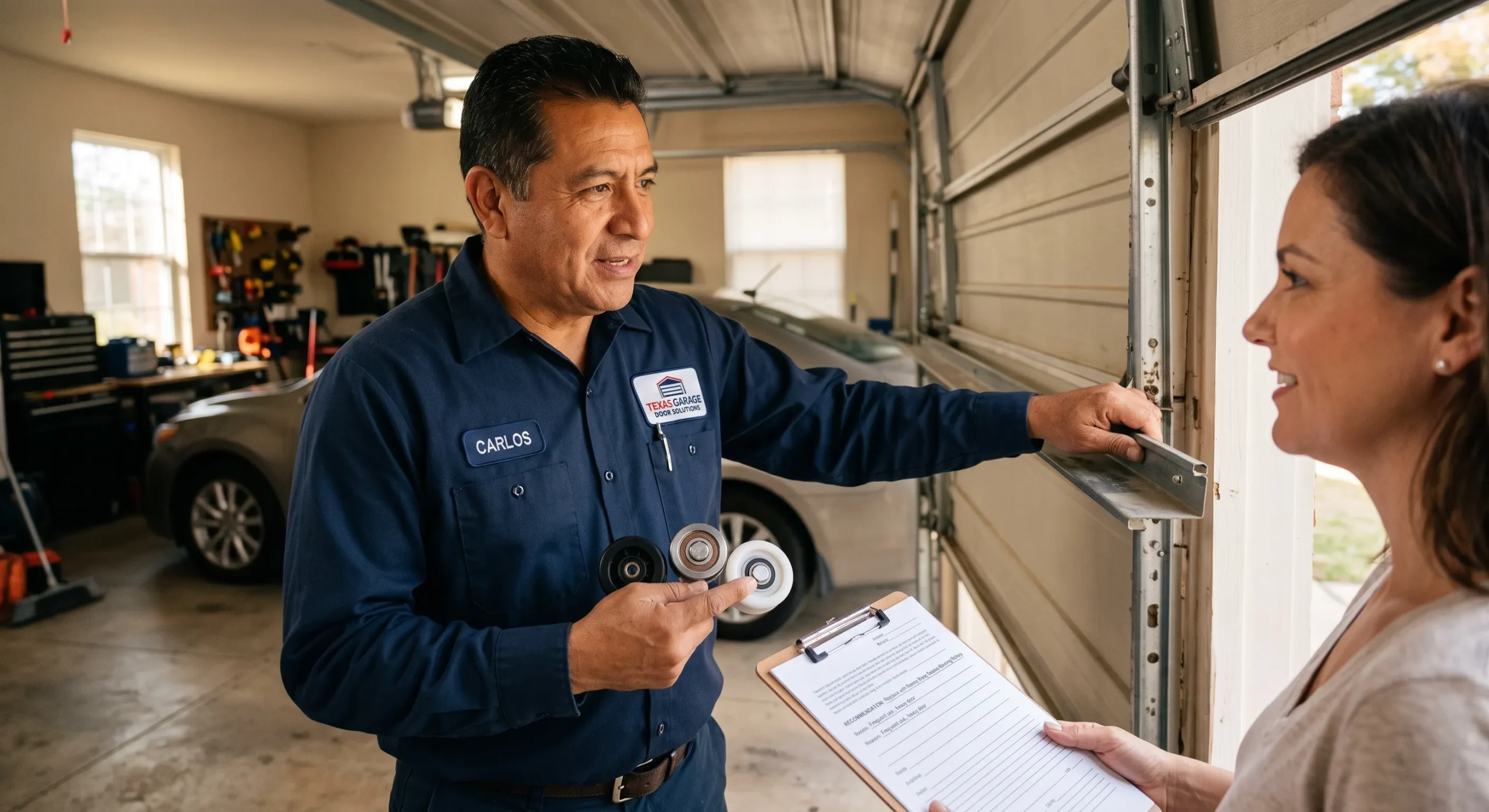
A trained technician brings tools and experience that extend beyond basic maintenance, especially for roller issues that need a closer look.
Professional support for garage door roller care typically includes:
- Diagnosing wear patterns that are hard to catch without training
- Recommending roller types suited to a specific door and usage level
- Handling replacements involving tension components like bottom rollers
- Checking the opener and surrounding hardware during the same visit
- Confirming whether an issue needs a repair or a full replacement
Routine visits from a professional tend to catch small issues long before they become noise, wobbling, or uneven movement.
Care for Your Garage Door Rollers the Right Way With Expert Help
Garage door rollers depend on regular lubrication, routine inspection, and prompt attention to any unusual noise or movement to keep the whole system running smoothly. Skipping this care puts additional strain on the tracks, hardware, and opener, all of which work in tandem with the rollers.
Affordable Garage Door Repairs of Indianapolis, LLC works with homeowners throughout Indianapolis on roller inspections, replacements, and everyday upkeep. Contact us or give us a call today, and let our team check your rollers before a worn one causes the door to jam or come off its track.