
Garage door rollers wear out quickly, mainly due to insufficient lubrication, dirty or misaligned tracks, an unbalanced door, and daily household use. These causes rarely act alone on most doors, which is why a roller problem that seems minor at first can worsen much faster than expected.
A residential garage door depends heavily on rollers that move smoothly and evenly with every single open and close cycle. Once any of these issues takes hold, that smooth movement breaks down gradually, and the rollers begin wearing out noticeably faster than normal.
Why Does Roller Condition Matter for Garage Door Performance?
Poor roller condition rarely stays confined to the rollers themselves for long, and the added strain it creates often spreads to other parts of the garage door system within a fairly short time.
Roller wear places strain on several other parts, including:
- Garage door openers work harder to pull a door that resists smooth movement
- Springs compensate for uneven weight distribution caused by damaged rollers
- Tracks absorb extra friction when rollers slide instead of rolling freely
- Hinges face added stress when the door travels unevenly
- The overall door lifespan shortens as compounding strain builds over time
To understand how long these parts typically last before this strain becomes a bigger issue, read our guide on How Long Do Garage Door Rollers Last Before Replacement?, which breaks down average lifespans by roller type and usage pattern.
What Are the Warning Signs of Worn-Out Rollers?
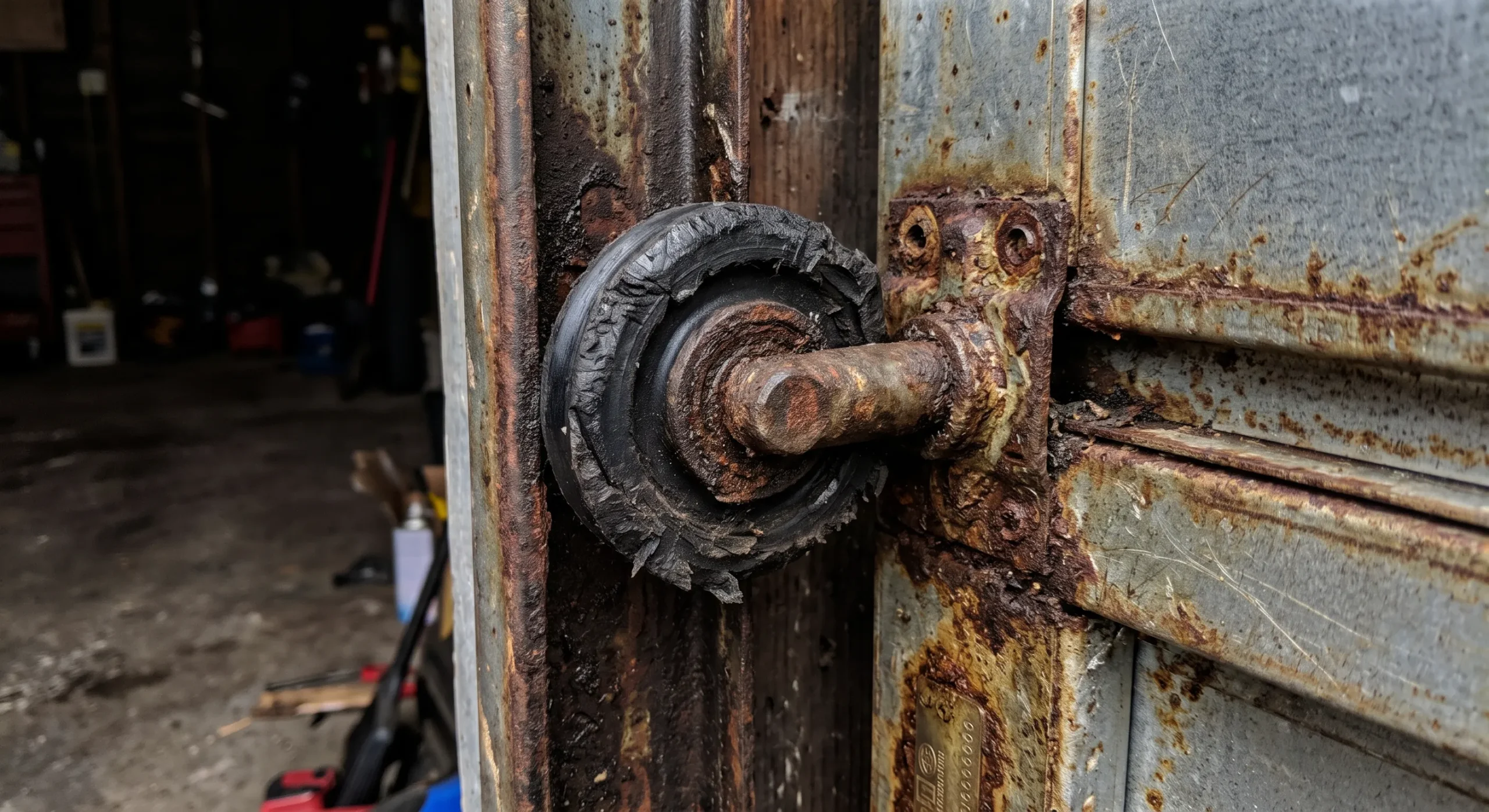
A garage door that once ran quietly will usually show a few small signs before roller wear turns into a bigger problem.
Common indicators of worn-out rollers include:
- Grinding or squeaking sounds that get louder with each cycle
- Jerky or uneven movement instead of one smooth motion
- Visible cracks, chips, or flat spots forming on the roller wheels
- The door hesitates or catches at certain points along the track
- Extra vibration felt through the garage door opener during operation
To recognize how these early signs point to specific roller problems, read our guide on What Are the Signs of Bad Garage Door Rollers?, which breaks down each symptom and what it typically means.
The Main Causes Behind Fast Garage Door Roller Wear
No or Improper Lubrication
Neglecting regular lubrication of metal or unsealed nylon garage door rollers lets friction build up quickly enough to grind the bearings down.
Lubrication breaks down for several reasons:
- Squeaking develops as friction increases once the lubricant wears away
- Heavy grease attracts dust and grit that scratches the bearing from the inside
- Exposed bearing designs lose lubricant faster than sealed roller types
- Petroleum-based grease breaks down more quickly than silicone-based alternatives
- Cold temperatures thicken lubricant and increase resistance inside the bearing
Rollers left dry for too long grind against their own internal parts, and that friction alone accounts for a large share of early roller wear.
Dirty and Blocked Tracks
Dirt and hardened grease inside the track prevent the roller from spinning freely, forcing the wheel to slide against the buildup rather than roll through it.
Track buildup forms through several common sources:
- Open garages allow dust and pollen to settle inside the track daily
- Old lubricant hardens into a sticky film that catches passing debris
- Wind carries leaves and yard debris straight into the track opening
- Shoes and tires deposit small pebbles and gravel along the track
- Spider webs and small nests accumulate unnoticed over several months
Flat spots on the wheel surface often trace directly back to this kind of buildup sitting inside the track for an extended period.
Misaligned or Bent Tracks
A track that shifts even slightly out of alignment forces the roller to grind against the side wall rather than spin freely within it.
Tracks fall out of alignment for a range of reasons:
- Vehicles backing into the door push the track out of its original position
- Mounting brackets loosen gradually and allow the track to drift
- Garage structures settle with age and pull the track off level
- Improper garage door installation leaves the track uneven from the very start
- Stored items falling against the track create a small, lasting bend
Every pass through a bent section adds uneven pressure that wears the roller down faster than normal use.
Unbalanced Garage Doors
Garage door springs keep the door balanced during travel, and weakened or mismatched tension shifts extra weight onto the bottom rollers.
Door balance shifts for several mechanical reasons:
- Spring tension weakens gradually with age and repeated use
- Mismatched springs fail to support the door’s actual weight correctly
- Cable stretch over time alters how evenly the door’s weight is distributed
- Temperature swings affect how springs expand and contract seasonally
- Worn spring hardware loses the ability to hold consistent tension
Extra weight settles on the bottom rollers first, which is why they tend to wear out well before the rollers positioned elsewhere on the door.
Low-Quality Roller Materials
Roller material directly affects durability, and standard plastic rollers chip and degrade far sooner than steel or sealed nylon garage door rollers.
Material choice affects wear in several ways:
- Plastic rollers crack under the weight that steel or nylon handles easily
- Exposed bearings on lower-grade rollers let debris in more easily
- Thin-stem construction bends under pressure that thicker stems resist
- Uncoated stems corrode faster than those with corrosion-resistant coating
- Lightweight bearing cages wear down sooner than reinforced cage designs
Builder-grade doors typically ship with plastic rollers, which homeowners often upgrade to higher-grade hardware during a garage door replacement.
High Usage Frequency
A garage door that cycles multiple times a day builds mechanical fatigue much faster than a door used once or twice a day.
Usage frequency drives wear through several factors:
- Each cycle adds a small amount of mechanical stress that accumulates over time
- Multiple daily drivers in one household increase the door’s total cycle count
- Attached garages used as a main entry point see far more daily cycles
- Opener motors on high-use doors work harder with every single cycle
- Repeated stress on the same rollers shortens their functional lifespan
Doors used as a household’s main entry point often need garage door repair sooner than doors used only occasionally.
How to Identify Which Cause Is Damaging the Rollers
Specific symptoms usually point to a single dominant cause, even when several issues appear to overlap at first glance.
Symptom patterns often reveal the underlying cause:
- Grinding on one side signals track misalignment rather than general wear
- Steady squeaking across the door points to a lubrication breakdown
- Visible debris inside the track confirms blocked tracks as the issue
- A door that feels heavy or uneven indicates a balance problem
- Cracked or chipped wheels suggest low-quality roller material
Identifying which pattern matches the door’s behavior narrows down the real issue well before any repair work begins.
Why Does This Damage Progress So Quickly?
Roller damage rarely stays isolated for long, since one issue tends to trigger the next in a fairly predictable mechanical sequence.
Damage builds quickly through this chain reaction:
- Debris trapped inside the track creates friction with every single cycle
- That friction generates heat that softens and wears down the roller surface
- Worn rollers begin sliding instead of rolling smoothly within the track
- Sliding motion places uneven, concentrated stress on the track’s alignment
- Misaligned tracks gradually pull the door’s overall weight balance off-center
This kind of chain reaction explains why a minor roller issue can escalate into a bigger problem within weeks rather than months.
Is the Damage Severe Enough to Need Repair or Replacement?
The decision between repair and full replacement usually comes down to how far the roller wear has progressed.
Factor | Repair | Full Replacement |
Wheel surface | Minor buildup or light debris only | Visible flat spots or chipping |
Bearing condition | Feels tight with no wobble | Loose, wobbling, or grinding internally |
Noise | Stops after cleaning and lubricating | Continues even after cleaning and lubricating |
Roller age | A few years old with light wear | Near or past average lifespan |
Wear pattern | Even wear across all rollers | One roller significantly worse than the rest |
Evaluating these factors together clearly points to the more practical choice between repair and full replacement.
When Should a Professional Take Over?
A handful of specific situations call for professional service rather than continued monitoring at home.
A professional should take over when:
- The door comes off its track, since realigning it involves tensioned cables
- Grinding continues after cleaning and lubricating, pointing to hidden damage
- Track shows visible bending, requiring specialized tools to straighten safely
- The door balance feels significantly off, suggesting a spring issue beyond the rollers
- Multiple rollers show heavy wear at once, often signaling a larger problem
These situations point toward a repair that requires professional tools and training rather than continued homeowner monitoring.
How Do Professionals Fix These Common Problems?
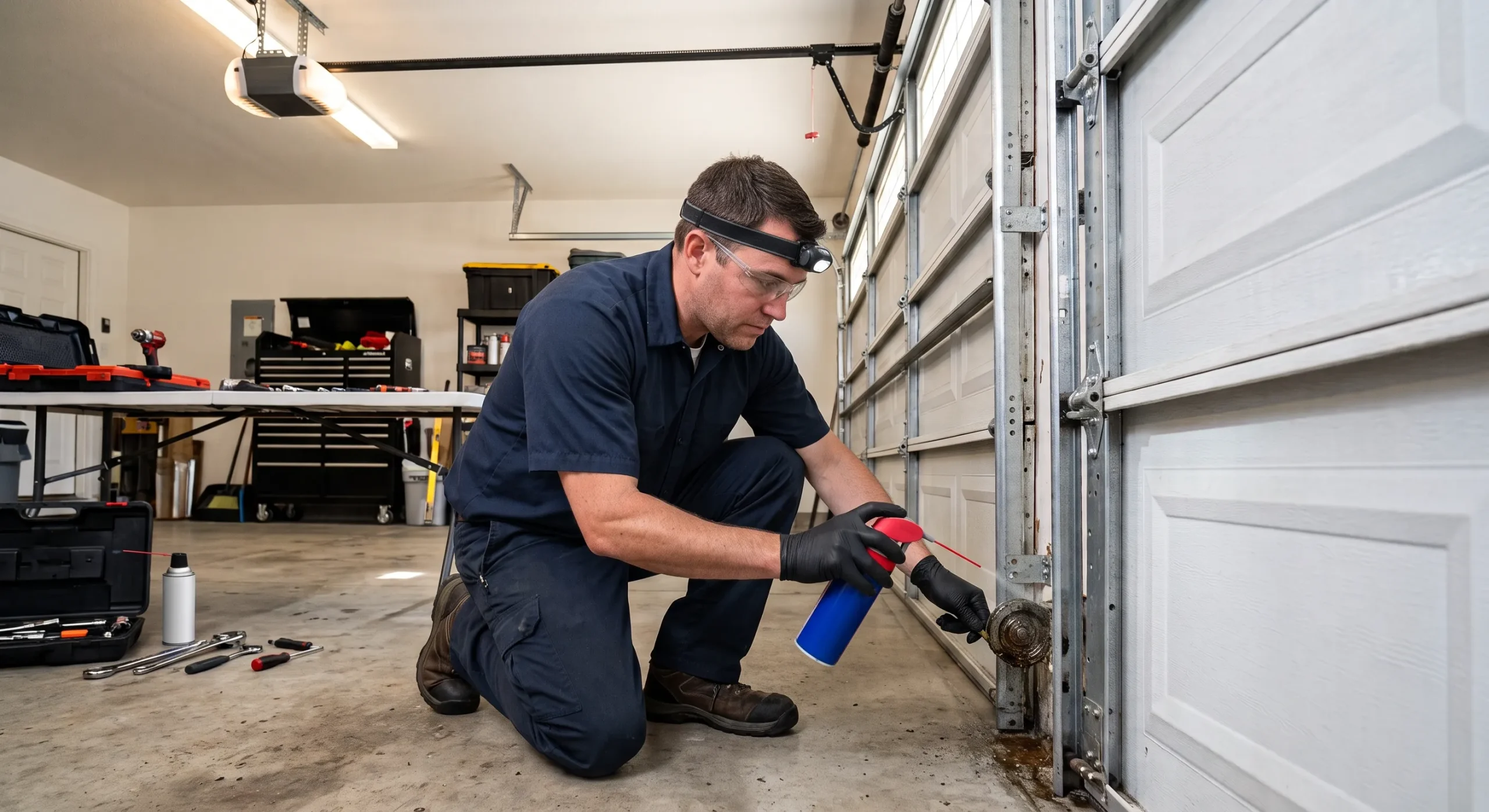
Professional service typically addresses the full system rather than the roller alone, since roller wear rarely occurs in isolation.
A typical service visit includes:
- Inspecting the roller wheels, tracks, and stems for wear or damage
- Testing spring tension to confirm the door’s weight is properly balanced
- Checking track alignment to catch bends or shifts before they worsen
- Lubricating all moving parts, including hinges and rollers, for smoother operation
- Replacing any hardware that shows wear beyond a simple repair
To maintain these results and prevent the same issues from returning, read our guide on How to Care for Garage Door Rollers Properly, which covers maintenance steps that extend roller life between service visits.
Address the Causes of Roller Wear Before They Shorten Garage Door Lifespan
Garage door rollers wear out fast for a handful of specific reasons, and recognizing which one applies makes the difference between a quick repair and a bigger problem. Knowing what to inspect, what to lubricate, and when to call for help keeps the entire system running the way it was designed to.
Affordable Garage Door Repairs of Indianapolis, LLC diagnoses the exact cause of rapid roller wear through hands-on inspection and years of field experience. Contact us or give us a call today, and let our team assess what the rollers and garage door need to keep running smoothly.