
A garage door roller often shows early warning signs, such as grinding noises, visible cracks, and uneven movement, well before it fails completely. People often hear or see these signals, but do not always realize they come from the rollers until the door starts having much bigger problems.
This kind of damage rarely remains limited to a single part of the residential garage door system for long, especially if left unaddressed. The uneven strain on the opener, combined with constant pressure on the track, eventually affects the overall performance of the door structure.
Why Do Garage Door Rollers Need Attention Over Time?
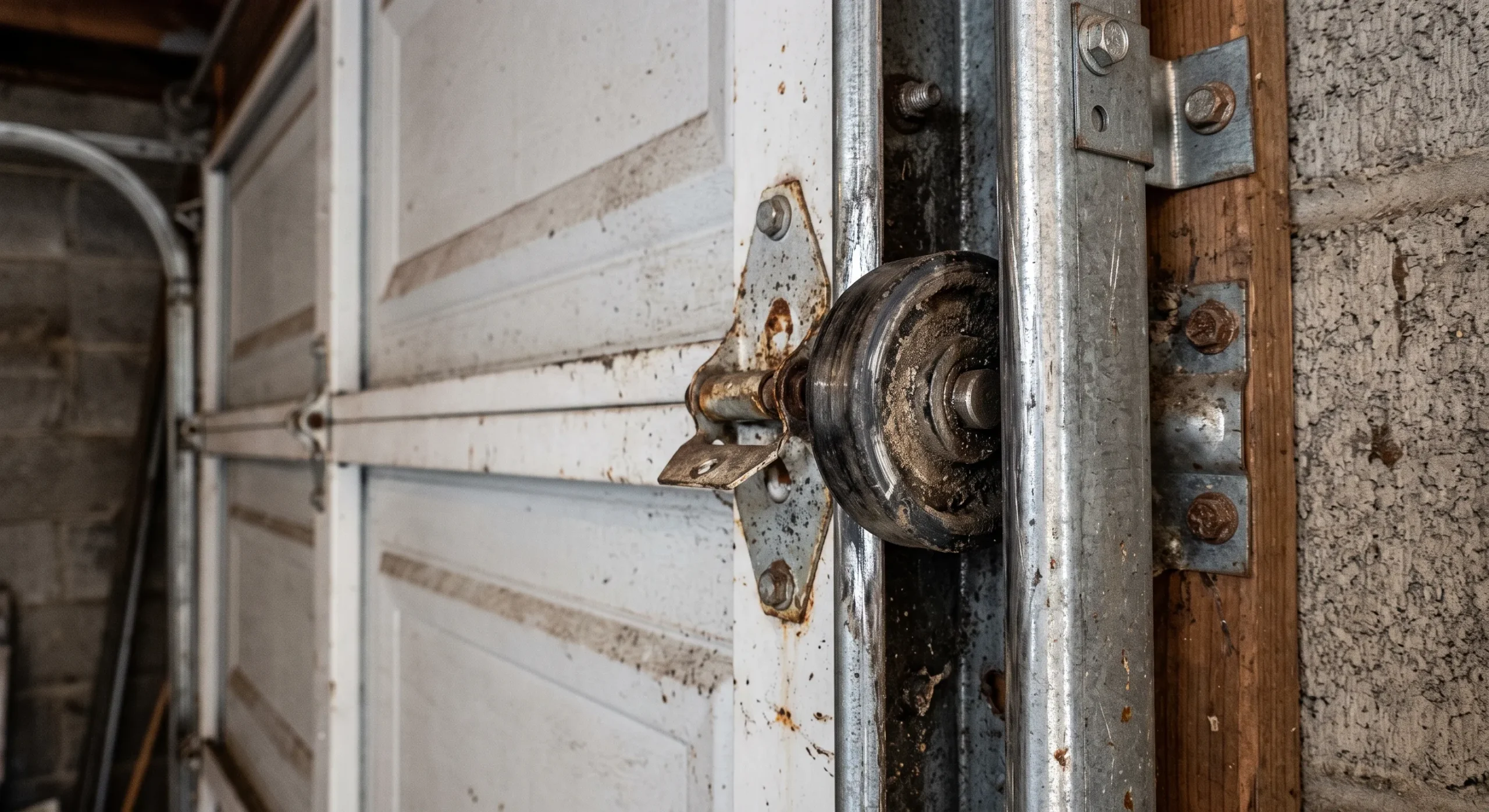
A garage door roller that wears down without notice forces nearby components, such as the opener, track, and hinges, to absorb the extra strain, which can affect the entire system over time.
Common reasons rollers start needing attention include:
- Repeated opening and closing cycles wear down the roller material.
- Extreme heat or cold can cause certain roller types to break down more quickly.
- Dirt and debris inside the track add friction that the rollers were not built to handle.
- Lack of lubrication increases resistance within the ball bearings in each roller.
- Age alone causes even well-maintained rollers to lose their original strength.
To understand how long garage door rollers typically last before wear becomes a bigger concern, read our guide on How Long Do Garage Door Rollers Last Before Replacement?, which breaks down average lifespans by roller type and usage pattern.
What Are the Warning Signs of Bad Garage Door Rollers?
Unusual Noises During Operation
Dried-out grease or a worn ball bearing inside the roller can cause grinding, squeaking, popping, or rattling sounds that persist even after lubrication.
Noise patterns to listen for include:
- Grinding gets louder near the top of the door’s travel.
- Squeaking returning within days of lubrication suggests a damaged bearing.
- Popping at the start of the cycle often means a roller is briefly catching.
- Rattling limited to one section usually points to that specific roller.
- A low humming sound often signals a bearing nearing full failure.
Sound alone offers strong clues, and each type of noise usually points to a different stage of wear occurring inside the roller.
Visible Cracks, Flat Spots, or Rust
Nylon and steel rollers both show clear physical damage once they reach the end of their functional lifespan.
Physical signs to check for include:
- Flat spots line up with where the door sits most when closed.
- Cracks near the roller’s center often indicate that the bearing casing has failed.
- Rust on one roller but not the others points to a local moisture source.
- A wheel wobbling side to side usually means a bent stem.
- Missing bearing pieces near the roller often show up as small metal shavings.
Physical damage rarely appears overnight, and uneven wear across rollers sometimes points back to how the original garage door installation was handled.
A Shaking or Vibrating Door
Uneven friction from worn rollers prevents the door from traveling smoothly, causing visible shaking or trembling during operation.
Movement patterns worth noticing include:
- Vibration starting partway through the cycle usually traces to one roller.
- Shaking felt through the wall often means a loosening track bracket.
- A door vibrating only while closing suggests that the weight worsens the issue.
- Noise syncing with each shake usually confirms the same roller source.
- Vibration that spreads to the opener rail signals advanced roller wear.
Vibration rarely appears in isolation, and it often means more than one roller inside the system is already struggling to keep up.
Jerky or Uneven Movement
Rollers that catch on the track instead of gliding through it cause the door to pause, jerk, or tilt during its cycle.
Signs of uneven travel include:
- A door that stops at the same spot points to a damaged section.
- One side lifting faster creates a tilt that stresses the opener.
- Jerks concentrated near the top often mean a roller near the header.
- Sticking that clears itself points to debris rather than a broken part.
- Movement that briefly smooths out and then returns suggests a worsening crack.
Jerky movement that continues to worsen despite basic checks often signals that garage door replacement is closer than a simple adjustment.
Black Residue Inside the Tracks
Dark powder or black smudges collecting along the metal tracks usually mean the outer layer of a nylon roller is breaking down.
Residue clues to watch for include:
- Residue concentrated in a single track section indicates the failing roller.
- Smudges returning fast after cleaning suggest advanced material breakdown.
- Fine dust differs from grease buildup, which points to a lubrication issue instead.
- A rougher cycle, paired with residue, confirms that the roller is the cause.
- Residue color shifting to a darker shade over time often signals worsening wear.
Residue buildup increases gradually, and noticing it early often depends on routine inspection rather than a quick glance.
The Door Coming Off Track
Severely worn rollers can bind or slip out of the track entirely, leaving the door in a position where it should not be operated.
Serious indicators to look for include:
- A leaning door usually means the roller on that side has failed.
- A disconnected panel signals that the roller has completely left its track guide.
- A visible gap while stuck often means the roller jumped the rail.
- Grinding right before derailment usually marks the roller’s final failure point.
- A door that will not budge at all often means a roller is fully wedged.
Stopping use immediately remains the safest response, and scheduling a garage door repair service promptly can help determine what caused the door to leave its track.
What Leads to Garage Door Roller Damage?
Roller damage rarely comes from a single cause, and small stresses tend to build up until the roller can no longer handle normal daily use.
Common causes behind roller damage include:
- Frequent cycles gradually break down the roller material.
- Extreme heat or cold speeds up wear on certain roller types.
- Dirt and debris inside the track create friction that the rollers were not built for.
- Dried lubrication increases resistance on the ball bearing inside each roller.
- Age alone weakens even well-maintained rollers.
To see how these causes manifest as physical damage over time, read our guide on What Causes Garage Door Rollers to Wear Out Fast?, which breaks down the specific symptoms associated with each cause.
What to Do When Garage Door Rollers Show Signs of Damage
A homeowner cannot fix a worn roller based on observation alone, but a few checks can clarify how urgent the problem is.
Steps worth taking once a sign appears include:
- Compare the noise or shaking side by side with the opposite roller.
- Check whether a flat spot lines up with the door’s resting position.
- Confirm the opener strains only at certain points in the cycle.
- Hold off on lubricant if a crack or bearing failure is visible.
- Record how quickly the symptom worsens over a few days.
These checks help distinguish a roller that needs simple attention from one that already needs a professional to step in.
When to Call a Professional for Garage Door Roller Problems
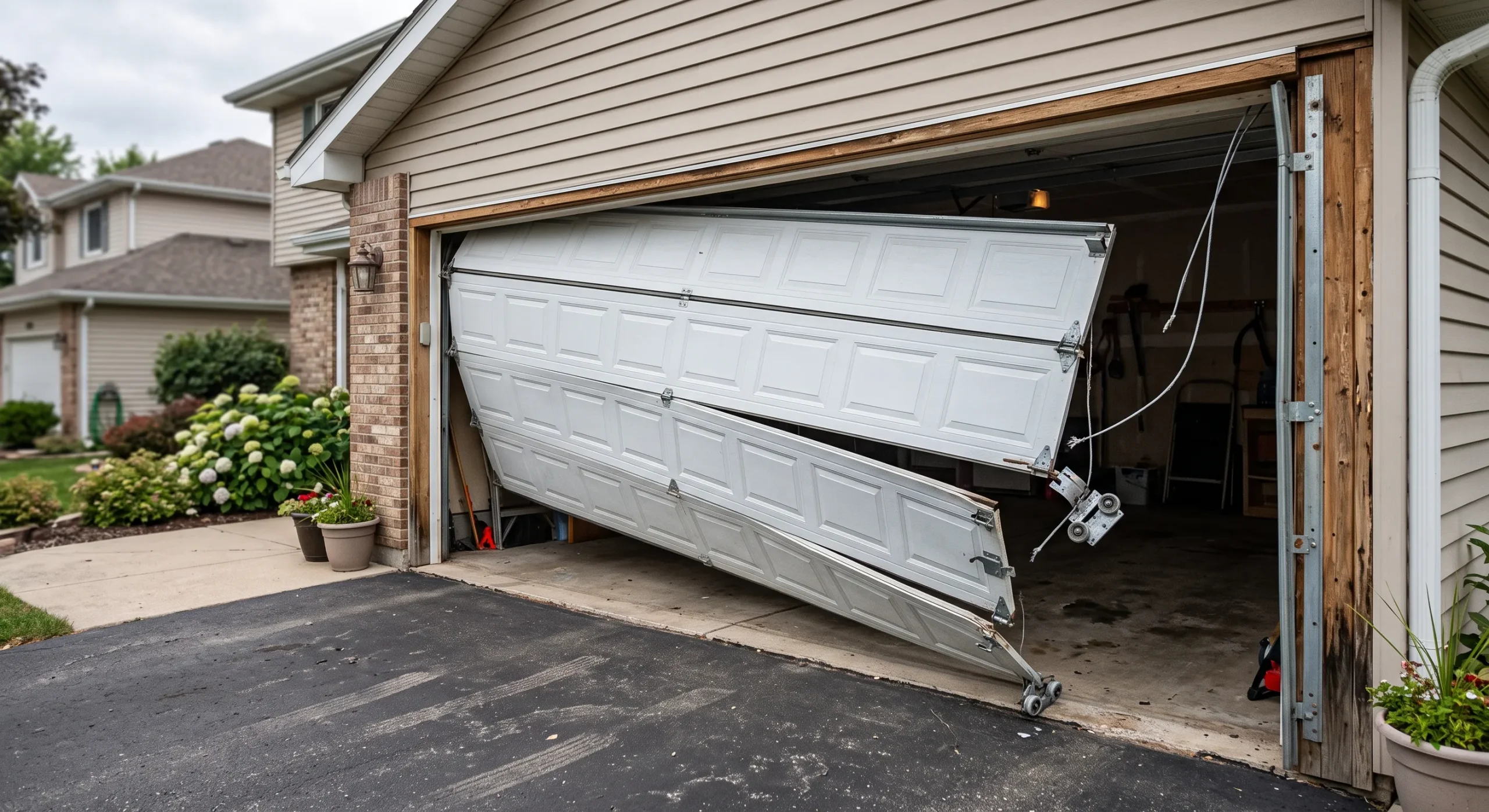
A homeowner can spot most roller symptoms, but knowing which ones require hands-on repair takes more experience.
Situations that call for a professional include:
- A door hanging off track on one side needs immediate attention.
- Two or more rollers showing wear at once often means the whole set is failing.
- Noise that returns within days of lubrication points to bearing damage rather than surface friction.
- An opener that strains only during part of the cycle suggests that a specific roller is catching.
- A prior adjustment that did not resolve the issue rules out a quick fix.
Reaching out at this stage gives a trained technician the chance to confirm exactly what the underlying damage involves.
What the Signs Reveal About Repair or Replacement
The type and severity of a roller’s symptoms usually determine whether a technician recommends a repair or a full replacement.
Sign Observed | Likely Outcome | Why It Matters |
Minor noise with no visible damage | Adjustment or lubrication | The roller structure is still intact, so a lower-cost fix often resolves the issue |
Cracked or chipped roller shell | Roller replacement | A damaged shell cannot be repaired and will continue to worsen with use |
Bent stem or wobbly wheel | Full assembly replacement | A bent stem affects alignment, making a single part swap ineffective |
Multiple rollers failing at once | Replacement of the entire set | Uneven wear across rollers usually signals age or system-wide strain |
Flat spot with no other damage | Repair or targeted replacement | Isolated wear may only require attention to that one roller |
To reduce how often these problems occur in the first place, read our guide on How to Care for Garage Door Rollers Properly, which covers the specific maintenance habits that help rollers last longer.
Schedule Expert Help for Garage Door Roller Issues
A garage door roller rarely fails without warning, and grinding noises, visible cracks, or uneven movement usually show up well before it stops working completely. Noticing these signals early gives homeowners a real chance to address the problem before it grows into something bigger.
Affordable Garage Door Repairs of Indianapolis, LLC brings hands-on experience to every roller inspection, helping homeowners understand exactly what their door is trying to signal. Our team accounts for local weather and daily use when assessing the condition of your rollers, so contact us or give us a call today to schedule an inspection.