
Resetting a garage door wont close issue is one of the most effective ways to restore your opener’s settings, recalibrate the sensors, and re-establish the correct travel limits without needing a garage door repair. Understanding the reset process gives you a clear path to solving the problem instead of guessing what went wrong.
Skipping the reset process and going straight to other solutions often means missing the actual problem entirely and making things harder to resolve. This guide walks through every reset method in a logical order so you can identify exactly what went wrong and get your garage door closing properly and consistently again.
What Does It Mean to Reset a Garage Door Opener?
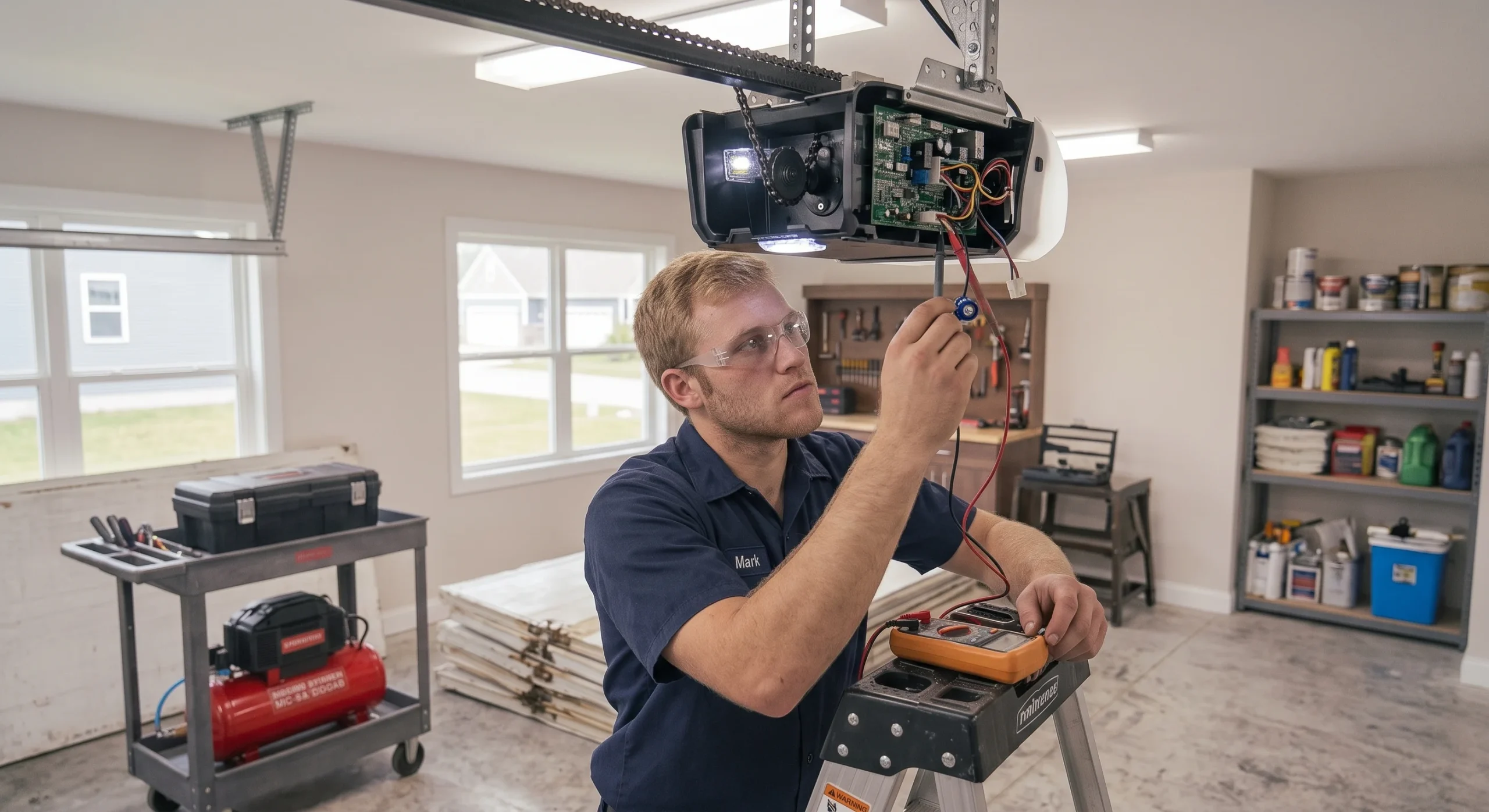
Resetting a garage door opener means clearing its current error state and restoring the programmed settings that control how far the door travels, how much force it uses, and how it communicates with the remote and wall button.
Key reasons why a reset becomes necessary include:
- A power surge wipes the opener’s stored travel limits and force settings.
- Signal interference between the remote and the opener unit breaks communication.
- The garage door safety sensors lose calibration after a bump or vibration.
- The opener enters an error state upon detecting excessive resistance during a close cycle.
- Repeated failed close attempts confuse the opener’s internal memory over time.
To understand every root cause behind why this problem starts in the first place, read our guide on Why Garage Door Won’t Close, which covers all the mechanical and electrical reasons Indianapolis homeowners run into this issue.
Why Wont My Garage Door Close?
A garage door wont close when one or more parts of the system have stopped functioning correctly, including the sensors, springs, limits, or opener.
The most common reasons include:
- Dirty or misaligned garage door safety sensors interrupt the infrared beam, triggering auto-reverse.
- Worn or broken torsion springs and extension springs make the door too heavy for the opener to lower.
- Incorrect close-limit settings are preventing the door from reaching the ground.
- Debris, a small rock, or bent tracks are blocking the door from completing its travel.
- A power surge or internal error has disrupted the opener’s stored settings.
Identifying which of these is causing the problem is the first step toward finding the reset method that will actually work.
Signs Your Garage Door Needs a Reset
A garage door wont close properly when the opener is sending clear signals that something in the system needs to be restored.
The most common signs include:
- Stopping halfway and reversing before the door reaches the ground.
- Blinking opener lights, with no movement at the door.
- Inconsistent remote response even with fresh batteries installed.
- A wall button that triggers the opener, but the door still refuses to close completely.
- Closing fully but immediately reopening on its own without any input.
To catch every warning sign before the problem gets worse, read our guide on Signs a Garage Door Wont Close Properly, which walks through how each indicator points to a specific issue within the system.
What to Prepare Before You Reset Your Garage Door
Getting the right things in place before a reset keeps the process moving without interruptions or missed steps.
Before you begin, make sure you have:
- A sturdy step ladder to reach the opener unit mounted on the ceiling.
- A soft cloth or dry cloth to clean the sensor lenses before resetting.
- A flashlight to inspect the tracks, sensors, and moving parts of the garage door.
- A flathead screwdriver for adjusting limit screws if needed.
- Your opener’s manual or model number for reference during the reset process.
To cover everything that needs to be checked before attempting a fix, read our guide on Garage Door Wont Close? Here’s What to Do First, which walks through the most important checks Indianapolis homeowners should make before taking any action.
How to Reset a Garage Door That Won’t Close
The Quick Power Cycle Reset
Unplugging the opener unit and letting it fully discharge clears minor errors that are keeping the garage door wont close issue active.
Start with these steps:
- Unplug the opener unit directly from the ceiling outlet.
- Wait 30 to 60 seconds to allow the internal capacitors to drain completely.
- Plug the unit back in and wait for the opener to fully initialize.
- Test the door using the wall button first, then try the remote.
- Repeat the cycle one more time if the door still does not respond on the first attempt.
Power cycle resets work best for issues caused by a power surge or a temporary signal error within the opener.
How to Reset the Safety Sensors
Misaligned garage door safety sensors are one of the most common reasons a garage door wont close, and resetting them restores the infrared beam the opener relies on.
Watch for these sensor behaviors before starting:
- The indicator light on the receiving sensor blinks instead of staying steady.
- The sending sensor shows a steady yellow light, but the door still refuses to close.
- Closing attempts consistently fail, while opening still works without issue.
- Sensor brackets appear shifted or loose after a recent bump or vibration.
- Wiping the lenses with a soft cloth does not stop the blinking indicator light.
Pivoting the receiving sensor slowly until the indicator light holds steady is the core of a proper garage door sensor alignment reset.
How to Reset the Travel Limits
Incorrect travel limits are a leading cause of a garage door reverses when closing instead of completing the full cycle to the ground.
Check these before adjusting:
- Limit adjustment screws sit on the back or side panel of the opener unit, labeled UP and DOWN.
- Door stops short of the ground, leaving a visible gap at the bottom.
- The door hits the ground and immediately reverses with no obstruction present.
- The DOWN limit screw controls how far the door travels toward the ground.
- One full counterclockwise turn on the DOWN screw moves the door approximately two inches lower.
Adjusting one turn at a time and testing after each change gives the most accurate result without overshooting the correct limit.
How to Reset the Motor Unit Force Settings
When limit adjustments do not resolve the problem, resetting the motor unit clears the opener’s memory and allows it to relearn the correct force needed for smooth operation.
Follow each step in order:
- Hold the Learn button on the motor unit for 6 to 10 seconds until the LED turns off completely.
- Release the button and wait a few seconds before moving forward.
- Press and hold the Learn button again until the LED begins to blink.
- Run the door fully open and fully closed so the opener relearns the required force.
- Reprogram all remotes and keypads since memory has been fully cleared after the reset.
Working through each step in order ensures the opener registers the correct force settings without skipping a stage.
How to Do a Manual Reset Using the Emergency Release
Pulling the emergency release cord disconnects the door from the drive system, allowing manual operation when the opener is completely unresponsive.
Follow these steps carefully:
- Locate the red bypass rope connected to the trolley latch on the rail above.
- Pull the emergency release cord down and toward the door to disengage the trolley.
- Push the door closed by hand while keeping fingers away from the track.
- Pull the bypass rope back toward the motor to re-engage the trolley latch.
- Press the remote or wall button until the opener returns to normal operation.
Re-engaging the trolley latch as soon as possible after a manual reset keeps the garage door system operating normally and eliminates any security risk.
What to Check After Resetting Your Garage Door
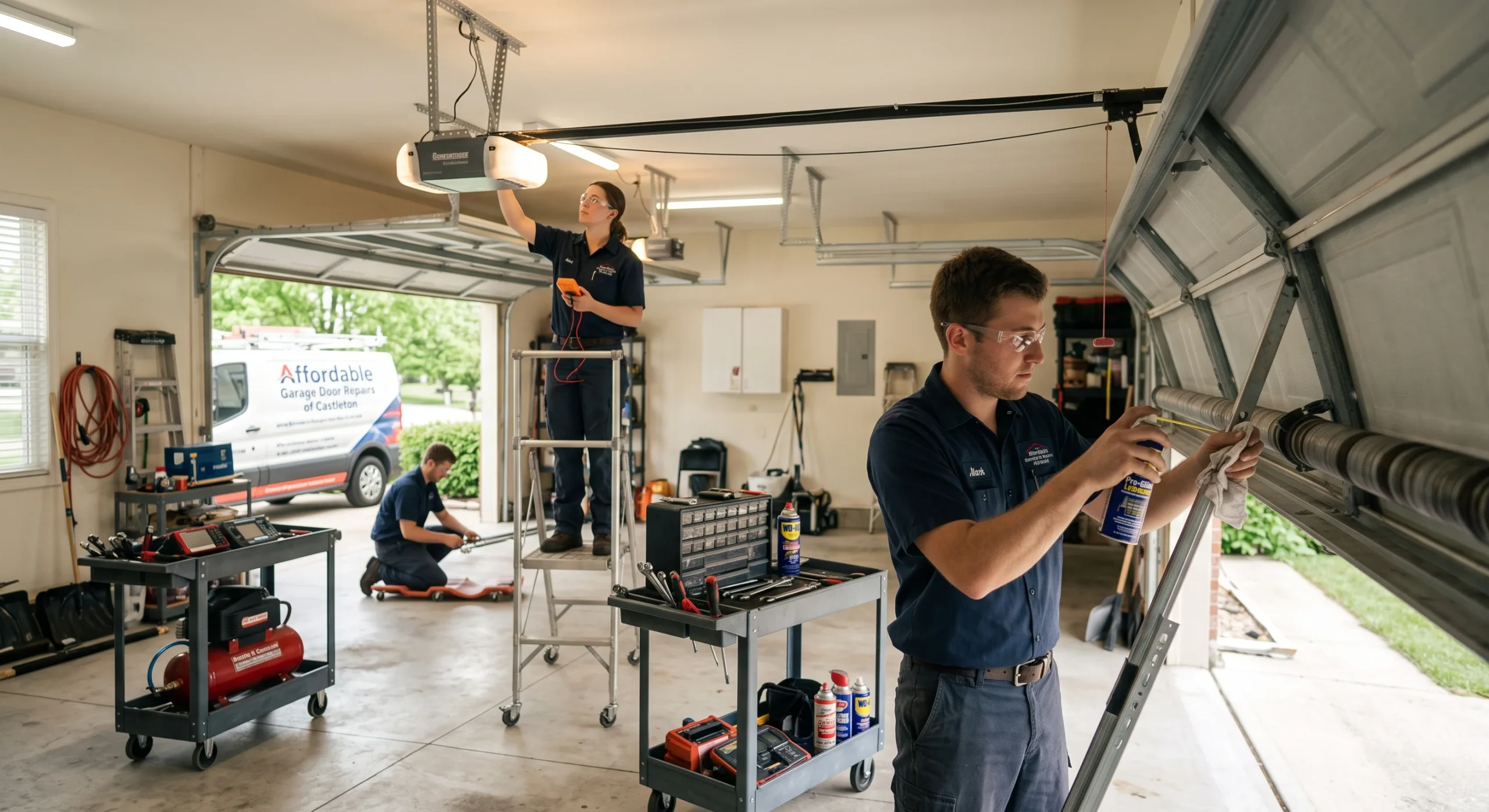
A reset is complete only after garage door opener troubleshooting confirms the door closes correctly and consistently.
Run through these checks:
- Both the wall button and remote must close the door completely.
- Full-cycle movement should be smooth, with no hesitation or unusual sounds.
- Auto-reverse must trigger when a small object is placed under the door.
- No visible gap should remain between the bottom of the door and the ground.
- Grinding, squeaking, or scraping points to a separate mechanical issue.
Any check that fails after a reset means the problem goes beyond the opener’s settings, and garage door opener repair is the logical next move.
When to Call a Professional for a Garage Door Reset in Indianapolis, IN
Some garage door wont close situations go beyond what a reset can fix, and knowing when to stop troubleshooting protects the entire system.
Watch for these signs:
- All five reset methods have been attempted with no results.
- Sensors continue to lose alignment even after repeated adjustments and cleaning.
- The opener unit produces grinding sounds, burning smells, or shows no response.
- The door moves unevenly, or one side sits visibly lower during operation.
- The emergency release cord is broken, frayed, or completely missing.
At that point, a licensed garage door technician can assess whether a professional repair or garage door replacement is the better path forward for your system.
How to Prevent Frequent Garage Door Resets
Regular garage door maintenance is the most effective way to keep the system functioning properly and reduce the need for repeated resets.
Keep these habits in place:
- Wipe the sensor lenses with a soft cloth every month to prevent interference with infrared beams.
- Apply white lithium grease to rollers, hinges, and tracks every three to six months.
- Test the auto-reverse function monthly by placing a small object under the door.
- Replace remote batteries before they die completely to avoid repeated signal failures.
- Inspect the bottom seal, tracks, and moving parts regularly for wear or damage.
A well-maintained garage door rarely needs a reset because problems are identified and addressed before they affect the opener’s settings.
Reset Your Garage Door the Right Way and Get It Closing Again
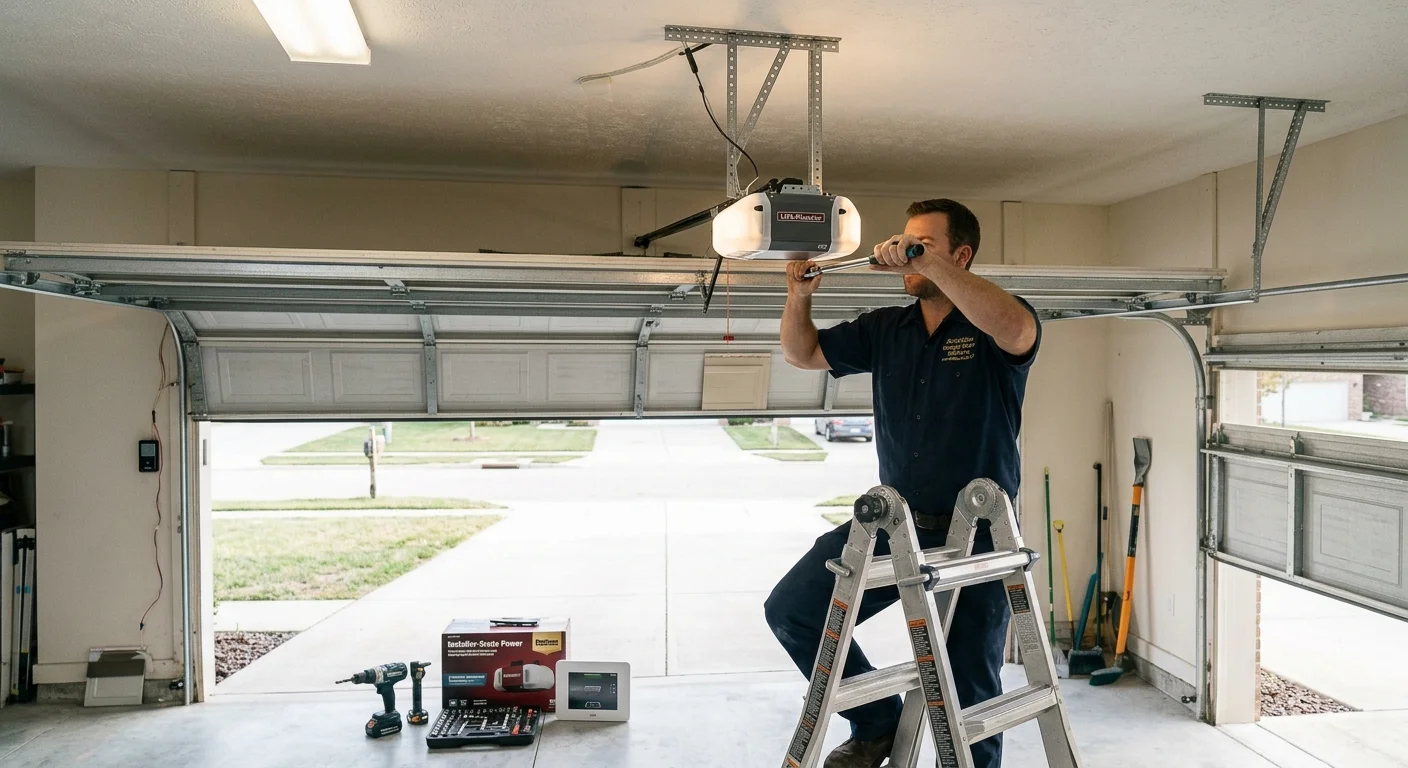
Every garage door wont close situation has a root cause, and working through each reset method in the correct order is the most direct way to find it. Understanding what triggers a reset and how each step restores the system puts you in a much better position to handle the problem confidently.
Affordable Garage Door Repairs of Indianapolis, LLC is the trusted team Indianapolis, IN homeowners rely on for accurate diagnostics and dependable garage door repair. Contact us or give us a call today, and let our team assess exactly what your garage door needs to start closing properly again.