
When your garage door will not open, it can bring your entire day to a halt. Several issues can cause this problem, but one of the most common is a broken garage door spring. This spring plays a critical role in the system by supporting the weight of the door as it opens and closes. Without it, the garage door opener is not designed to handle the full weight of the door on its own.
Over time, constant use places stress on the spring until it eventually fails, resulting in a broken garage door spring. When this happens, the garage door becomes too heavy to lift, leaving it stuck in place and unable to move. Understanding the role of the garage door spring makes it easier to see why professional garage door repair becomes necessary when the door will not open, allowing you to regain access to your garage and get back to your routine.
Why a Broken Garage Door Spring Stops the Door From Opening
A properly working garage door relies on balance, and the springs are what make that balance possible. They are wound or stretched under significant tension, allowing them to support the heavy weight of the door as it moves. Because of this stored force, the door can be lifted by hand, and the garage door opener can guide it smoothly along the tracks without strain.
When a garage door spring breaks, that stored energy disappears instantly. The opener is designed to move the door, not to carry its full weight, which can be hundreds of pounds. As a result, the motor may run but fail to lift the door, and the door itself becomes impossible to raise manually. Common signs often appear at this point, such as a loud snapping sound, a visible gap in the spring, or a door that sits unevenly. These changes signal that the system no longer has the support it needs to operate.
For a deeper look at why this happens and what it means for your garage door, explore our guide “Broken Garage Door Spring: What Happens When It Fails?”
How a Broken Garage Door Spring Affects Door Balance and Movement
Garage door springs are usually installed in pairs so the door remains evenly supported as it opens and closes. When one spring breaks, that balance is immediately lost. The side with the failed spring no longer carries any load, shifting the entire weight of the door onto the remaining spring and causing the door to tilt or hang unevenly.
This imbalance places excessive stress on other parts of the system. The intact spring is forced to handle more weight than it was designed for, increasing the risk of additional failure. At the same time, misalignment can cause rollers to bind against the tracks, leading to grinding noises or jerky movement before the door stops altogether. Continued operation in this condition can quickly escalate the damage, which is why a broken spring should never be ignored.
What Happens Inside the System When the Spring Fails
When a garage door spring fails, the impact extends far beyond the door itself. The opener is often the first component affected, as the motor must suddenly bear the full weight of the door without assistance. This added strain can wear down internal components and lead to serious mechanical damage over time.
The cables and tracks are also at risk, especially on heavier systems such as commercial garage doors. Without proper spring tension, cables can loosen or slip off their drums and may even snap under sudden stress. An unbalanced door can pull unevenly against the tracks, causing rollers to bind or the tracks themselves to bend. In extreme situations, the door may come off its tracks entirely, creating a dangerous condition. These chain reactions highlight why a broken garage door spring should be addressed promptly and why continued use of the door can lead to far more serious problems.
Garage Door Spring Types and Replacement Considerations
Not all garage door springs function the same way, which is why understanding the type used in your system matters. Most garage doors rely on one of two designs: torsion springs or extension springs. Each plays a different role in supporting the door, and the type installed can influence how the system performs over time, as well as what is involved when replacement becomes necessary.
Spring type is an important factor when service is required because all springs wear down with regular use, regardless of the door design. Knowing which spring your garage door uses helps set clear expectations about how the system works and what is involved in restoring proper operation. The sections below explain what separates these spring types and how those differences affect the replacement process.
For more insight into early issues to watch for, take a moment to read “Broken Garage Door Spring: What Are the Warning Signs?”
Differences Between Garage Door Torsion Springs and Extension Springs
The primary difference between torsion springs and extension springs is how they manage force to lift the garage door. This difference affects door balance, system stability, and overall performance. Torsion springs are now the most common option in residential garage doors because they provide smoother and more controlled movement.
A torsion spring is mounted on a metal shaft above the door opening and works by twisting as the door closes. The stored energy is released as the door opens, lifting the door in a steady and balanced way. Extension springs are installed along the sides of the door near the tracks and work by stretching when the door is closed and contracting as it opens, helping to support the door’s weight through tension.
Key differences include:
- Location: Torsion springs are installed above the garage door opening, while extension springs run along the sides near the tracks.
- Operating method: Torsion springs store energy by twisting, whereas extension springs rely on stretching and contracting.
- Lifespan: Torsion springs generally last longer than extension springs under normal use.
- System behavior: Torsion springs provide more balanced door movement, while extension springs place more load on side components.
- Failure response: Torsion springs stay secured on the shaft if they break, while extension springs depend on additional safety components to control movement.
How Spring Type Influences Garage Door Spring Replacement
The type of spring installed on a garage door directly affects how replacement is handled. Torsion springs require precise adjustments to ensure proper tension, which makes accurate installation essential for smooth operation. When installed correctly, they help the door move evenly and reduce strain on other components.
Extension springs follow a simpler layout, but they still operate under significant tension and must be handled carefully as part of reliable residential garage door services. Regardless of spring type, proper sizing is critical. The replacement process also takes into account the door’s height, weight, and construction, especially with heavier or insulated doors that place greater demands on the spring system.
Selecting the correct spring ensures the door remains balanced and prevents unnecessary stress on the opener, tracks, and cables. When the spring matches the door’s requirements, the system operates more smoothly and maintains reliable performance over time.
Garage Door Spring Repair and Replacement Process
When a garage door spring breaks, repair is no longer an option because the spring itself cannot be restored. Replacement is the only way to return the system to proper operation. This process involves more than installing a new spring, as the entire garage door system must be evaluated to ensure it operates safely and smoothly. A trained professional focuses on restoring balance, confirming that all components work together as intended, and preventing added strain on the opener and door hardware.
Professional service is essential because garage door springs are under extreme tension, which makes handling them dangerous without the right experience. The replacement approach can vary based on the spring type and the door’s design, and some situations require faster attention when a broken spring prevents the door from opening at all. Understanding what happens during service helps set clear expectations and highlights why prompt attention matters.
To learn more about safety concerns in these situations, read “Broken Garage Door Spring: Is It Safe to Use the Door?”
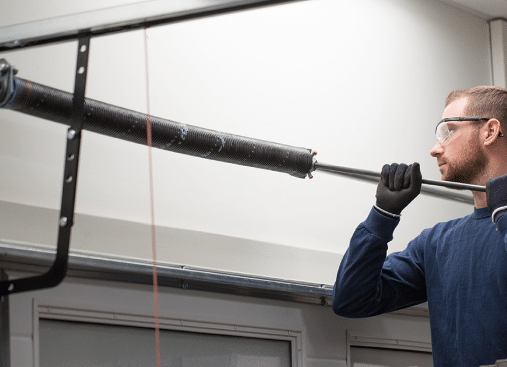
What to Expect From a Broken Garage Door Spring Service
When you schedule a Broken Garage Door Spring service, the work typically follows a structured and careful process designed to restore safe operation. The technician begins with a full inspection of the garage door system, not just the spring itself. This includes checking related components such as cables, tracks, and rollers to identify any additional issues caused by the spring failure.
Once the inspection is complete, the technician explains the condition of the system and the steps needed to correct it, whether the work involves repairs or full garage installations. Even when only one spring has failed, both springs are often replaced to maintain proper balance and reduce the risk of another failure in the near future. Replacing both allows the door to lift evenly and helps the system perform consistently after service.
A typical garage door spring service includes:
- A complete safety inspection of the garage door system
- Removal of damaged or worn springs
- Installation of correctly sized replacement springs
- Adjustment of spring tension to restore door balance
- Lubrication and testing to confirm smooth operation
This structured approach ensures the garage door functions reliably while reducing stress on other components and improving overall system performance.
When Emergency Garage Door Spring Repair Is Needed
A broken garage door spring can quickly become more than an inconvenience when it creates safety or access issues that cannot wait. If your vehicle is trapped inside the garage or the door is stuck partway open, the situation can leave your home exposed and put the people around it at risk. A door with a failed spring is unstable, which means added stress on the remaining spring, cables, and tracks, any of which could give way without warning and cause the door to drop suddenly. When a door hangs at an angle or comes off its tracks, attempting to handle the problem on your own can make the danger worse. In these situations, emergency garage door spring repair is essential because it brings fast response from a technician who can secure the door, address the spring failure, and restore safety to your home as quickly as possible.
Understanding why a garage door will not open when a spring breaks is important for any homeowner. Springs and door components work together to control movement and balance, so when one part fails, the entire system is affected. Recognizing early signs of spring trouble and responding promptly can help prevent larger issues and reduce the risk of more extensive damage over time. Because garage door systems use different types of springs, it is also important to consider what your specific door requires before any repair or replacement takes place. Staying informed and acting early helps keep your garage door operating smoothly while maintaining a safer and more reliable system.
When you need dependable help, Affordable Garage Door Repairs of Indianapolis, LLC is a trusted local option known for clear communication, skilled workmanship, and a focus on restoring proper door function without unnecessary delays. Our team understands how disruptive a broken garage door spring can be and works efficiently to get systems back on track while prioritizing safety and long-term performance. If your garage door is not opening or showing signs of spring trouble, contact us today or give us a call to schedule service and get your garage door working properly again.