
The garage door is the largest moving part in most homes, and its smooth operation depends heavily on the garage door spring. This component is designed to support the weight of the door, allowing it to open and close with controlled movement rather than raw force. By balancing the door’s weight, the spring reduces strain on the entire system and allows the door to function as intended during everyday use.
When a broken garage door spring causes that balance to be lost, the entire system can quickly become unreliable. The door may feel extremely heavy or stop moving altogether, even when the garage door opener is activated, since the opener is not built to carry the full weight on its own. Understanding how a broken spring affects the door helps clarify why proper attention is necessary, restoring smooth operation while maintaining the safety and security of the home.
How a Broken Garage Door Spring Impacts Home Safety
When a garage door spring breaks, it immediately creates a serious safety concern because the spring is responsible for controlling the door’s movement under constant tension. That tension allows the door to rise and lower in a steady, controlled way, and without it, the door can drop suddenly and without warning. Anything or anyone beneath the door is at risk of significant injury, which is why a broken spring should never be taken lightly.
While modern garage doors include safety features such as sensors, those systems are not designed to compensate for spring failure. The door itself is extremely heavy, and once the spring breaks, safety mechanisms cannot prevent the door from falling or shifting unpredictably. Understanding these risks helps clarify why a broken garage door spring requires immediate attention and why delaying action can put both people and property in danger.
For more insight, be sure to read our blog “Broken Garage Door Spring: What Are the Warning Signs?”
Safety Issues Caused by a Broken Garage Door Spring
Operating a garage door with a broken spring is unsafe because the component responsible for supporting the door’s weight is no longer functioning. Using the automatic opener in this condition places excessive strain on the system, often leading to motor damage or internal gear failure as the opener attempts to lift more weight than it was designed to handle. Manually lifting the door is also dangerous, as the unexpected weight can cause loss of control and result in serious injury if the door slips or falls.
A broken spring can also cause unpredictable behavior throughout the garage door system, increasing the risk of sudden failures such as:
- Sudden Door Collapse: The door may drop all at once, potentially causing serious injury or property damage.
- Unpredictable Movement: If the spring fails while the door is in motion, the door may slam shut or move off its track.
- Snapping Cables: Added stress from a broken spring can strain the cables, increasing the risk of them snapping and whipping with force.
Because of the high amount of stored tension involved, a broken garage door spring is one of the most hazardous issues within the system and should always be treated with caution.
Why Prompt Broken Garage Door Spring Service Matters
Delaying service after a garage door spring breaks often leads to further damage throughout the system. Continued use places excessive strain on the opener, tracks, and cables, turning what could have been a straightforward repair into a more complex problem. Addressing the issue promptly helps prevent additional wear and protects other components from unnecessary damage.
Beyond mechanical concerns, a malfunctioning garage door can disrupt daily routines and compromise security for both homes and commercial garage doors. A door that will not close properly leaves a property exposed, while one that cannot open can interfere with access, deliveries, and scheduling. Prompt Broken Garage Door Spring service restores proper operation and provides reassurance that the door is once again safe, reliable, and secure. Acting quickly not only protects the system but also brings peace of mind by reducing the risks associated with an unstable garage door.
Why Garage Door Springs Fail Over Time
Garage door springs are built to handle repeated use, but they are not designed to last forever. Their lifespan is measured in cycles, with one cycle counting as the door opening and closing once. Over the years, daily use adds up, forcing the metal to bend and stretch thousands of times. As that constant motion continues, the steel gradually weakens until the spring can no longer handle the stress and eventually fails.
Several factors can shorten that lifespan even further. The type of spring, the size of the door, and the overall weight it supports all play a role in how quickly wear develops. Heavier doors require stronger springs that remain under greater tension, which causes them to wear out sooner. Without regular care, such as keeping the springs properly lubricated, friction and stress increase, making failure more likely. Environmental conditions and everyday use work together to accelerate this process, which is why some springs break earlier than expected.
For a deeper explanation, check out our blog “Broken Garage Door Spring: Why the Door Won’t Open?”
Environmental and Wear Factors Affecting Garage Door Springs in DeLand, FL
In DeLand, FL, local environmental conditions can place added strain on garage door springs. High humidity and exposure to salty coastal air encourage rust to form along the coils, weakening the steel and interfering with smooth operation. As corrosion spreads, the spring becomes more brittle and far more likely to break without warning, often well before it reaches its expected service life.
Normal wear remains the primary cause of spring failure, as every door movement contributes to gradual metal fatigue. Older garage door systems are especially vulnerable because their springs have already endured thousands of cycles over many years of use. When a door and its components show widespread wear, a broken spring may signal deeper system fatigue rather than an isolated issue. In those cases, a professional assessment can help determine whether replacing the spring alone is sufficient or whether a broader upgrade makes more sense for long-term reliability.
How Ongoing Strain Leads to Garage Door Spring Repair Needs
Garage door springs perform a demanding task by constantly supporting a heavy weight while keeping the door balanced. Each time the door moves, the spring twists or stretches under tension, slowly weakening the metal through repeated stress. Over time, this ongoing strain causes the spring to lose strength until it can no longer perform safely.
Warning signs often appear before a complete failure occurs. Unusual sounds such as grinding, squeaking, or creaking during operation may indicate worn coils or uneven tension, while visible gaps in the spring signal that it has already broken. A door that feels heavier than usual when lifted or appears uneven as it moves can also point to spring-related problems. Addressing these signs promptly through residential garage door services helps prevent sudden failure and protects other components from unnecessary damage.
Professional Garage Door Spring Repair and Replacement
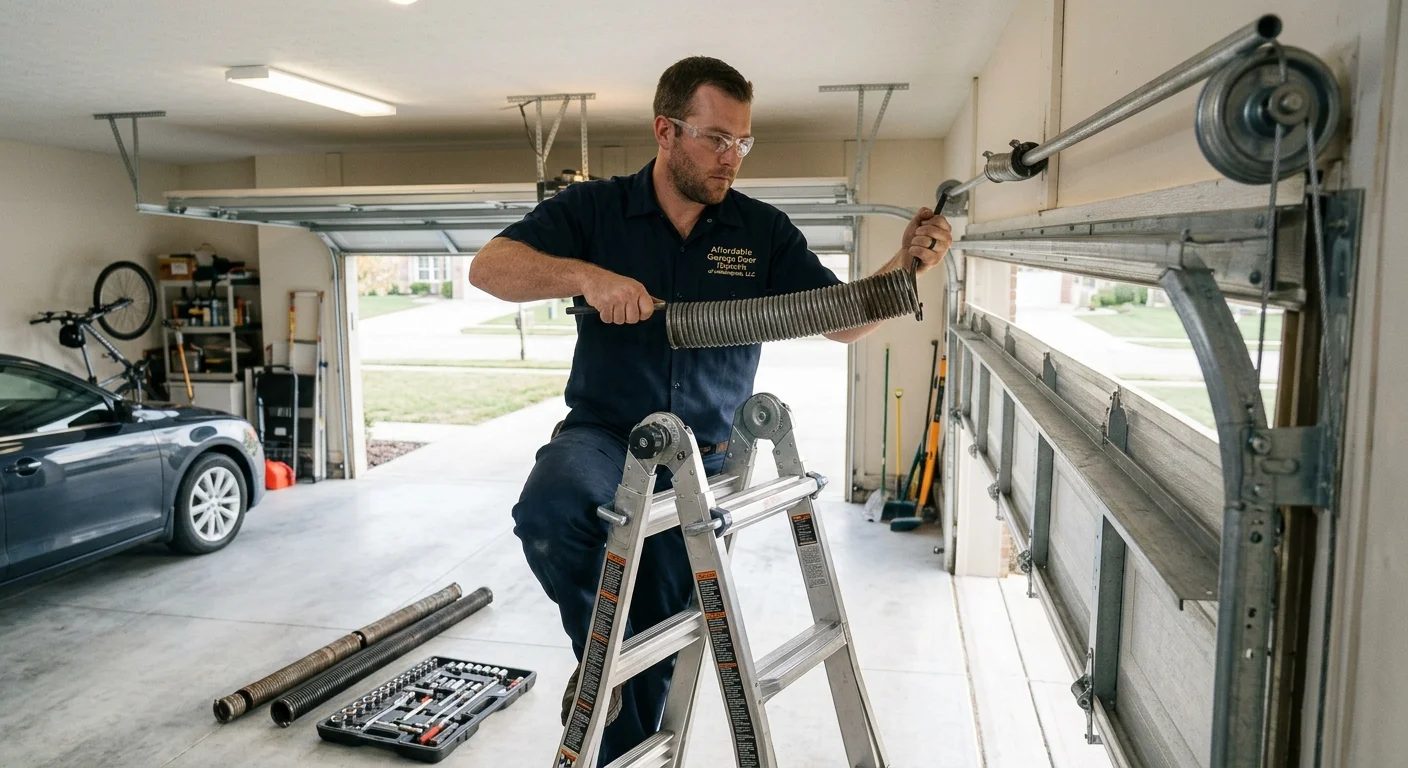
When a garage door spring breaks, garage door spring repair typically involves replacing the spring rather than attempting to restore it. Springs are designed to handle extreme tension, and once they fail, they can no longer perform safely or reliably. Replacing both springs at the same time helps maintain proper balance and ensures the door operates smoothly. The process requires releasing any remaining tension, removing the worn springs, and installing new ones that match the door’s size and weight so the system functions as intended.
Because garage door springs are under significant tension, this type of repair carries serious safety risks. Professional handling is essential, as trained technicians have the tools and experience needed to manage the process safely and efficiently. Attempting this work without proper training increases the chance of injury and can lead to further damage within the garage door system. Professional service helps protect both the home and the people inside it while restoring reliable operation.
To learn more, read our blog “Broken Garage Door Spring: Is It Safe to Use the Door?”
When Garage Door Spring Replacement Is the Appropriate Solution
A broken garage door spring should always be replaced rather than repaired, as a snapped spring cannot safely support the door. Installing a new spring that matches the existing system is critical for proper function, whether the door uses torsion or extension springs. Each system is designed to work with a specific type of spring, and maintaining that compatibility ensures stable movement and long-term performance.
Replacing both springs at the same time is widely recommended because they experience the same level of wear over the years. When one spring fails, the other is often close behind, and leaving it in place can lead to imbalance within the system. An uneven door places extra strain on panels and the opener, increasing the likelihood of future issues. A full spring replacement completed by a professional supports proper alignment during garage installations, helps restore balance, reduces stress on connected components, and ensures consistent, dependable operation moving forward.
The Role of Emergency Garage Door Spring Repair in Restoring Function
A broken garage door spring can happen without warning, leaving your vehicle trapped inside and your home more vulnerable than usual, which is why emergency garage door spring repair service is so important in these situations. The purpose of this service is to restore proper door function as quickly as possible while maintaining safety throughout the process. When handled by a trained professional, the replacement is completed efficiently using the correct tools and properly matched springs, allowing the technician to manage the door’s weight, remove the damaged components, and install new springs with precision. Knowing that experienced help is available removes the pressure of dealing with a dangerous repair on your own and eliminates concerns about an unsecured or malfunctioning garage door. With emergency service, normal operation is restored quickly, giving you peace of mind and allowing you to move forward with your day safely.
Understanding how the garage door spring affects both safety and everyday operation is essential for keeping your home protected. When a spring is not functioning properly, it can create serious risks and place unnecessary strain on the entire garage door system, which is why prompt repair or replacement is so important. Acting quickly at the first sign of trouble helps prevent further damage and keeps the door, its components, and overall operation working as they should. Staying informed about warning signs and potential safety concerns can also make it easier to respond with confidence, and when questions remain or the situation requires expert attention, turning to a professional ensures the issue is handled safely while giving you peace of mind.
For homeowners looking for dependable support, Affordable Garage Door Repairs of Indianapolis, LLC offers experienced service focused on safety, reliability, and long-term performance. Our team understands how critical a properly functioning garage door is to everyday life and approaches each repair with attention to detail and care. If your garage door spring is showing signs of trouble or has already failed, contact us today or give us a call to schedule service and restore safe, smooth operation with confidence.