
A fake garage door review can be identified by checking its posting timing, comparing its wording against other reviews, and confirming the account’s full posting history in detail. Learning these signals protects a homeowner from trusting praise disconnected from any real garage door repair work performed.
Genuine feedback almost always includes a detail a fabricated review skips entirely, such as a technician’s name, a specific part, or an honest price paid upfront in writing. Reading past the star rating with this in mind changes a quick scroll into a genuinely reliable screening process for every single future hire.
Key Takeaways
- Reviews posted in sudden bursts often signal a fabricated pattern
- Repeated or near-identical wording across reviews rarely reflects real feedback
- Genuine reviews name a specific technician, part, or repair detail
- A reviewer with no other posting history deserves closer scrutiny
- Cross-checking a company’s name across platforms confirms consistency
Steps to Confirm a Review Before Trusting It
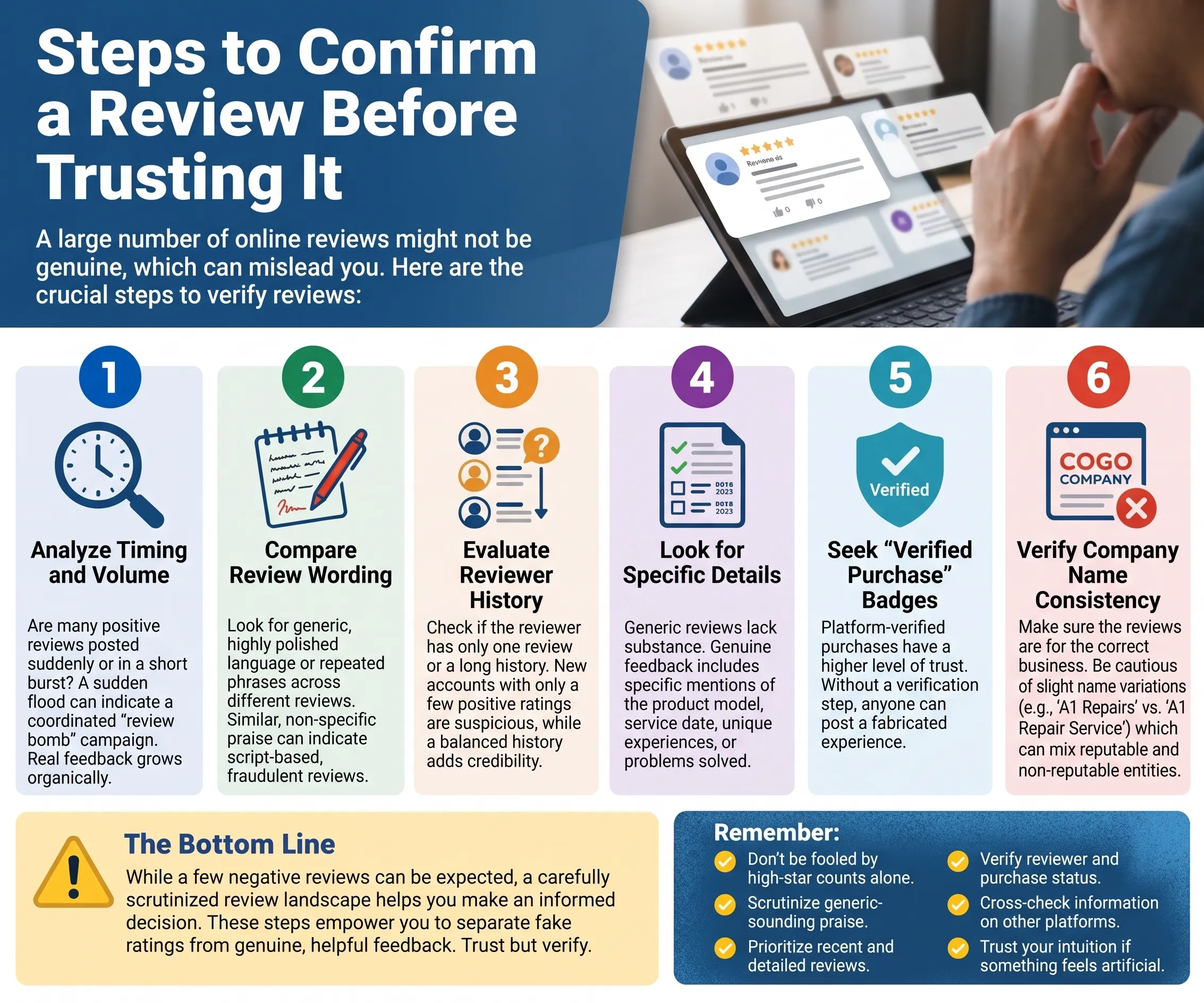
Verifying a review before trusting it protects a homeowner from decisions based on feedback that was never genuine.
Verification Step | What to Check | What It Reveals |
Timing and volume | Whether reviews cluster in a short window | Signals a fabricated posting pattern |
Wording comparison | Repeated phrases across different reviews | Points to copied or incentivized content |
Reviewer history | Whether the account reviews only one business | Reveals a possibly paid or fake account |
Specific details | Mentions of a technician, part, or price | Confirms a real service actually happened |
Verified purchase | A platform tag confirming an actual transaction | Rules out reviews with no real interaction |
Company name consistency | Whether the name matches across platforms | Confirms the business is not hiding identity |
Confirming even one or two of these signals before hiring often reveals whether a review reflects a real experience or a manufactured one.
Checking the Timing and Volume of Reviews
Reviews posted within a short, unnatural window often signal a company paying for feedback rather than earning it through real service.
Patterns worth watching for include:
- A sudden burst of five-star reviews within days of each other
- Long gaps between reviews followed by an unexplained spike
- Multiple reviews posted at nearly the same hour or date
- No steady pattern of reviews across several months
- A cluster of reviews appearing right after a garage door replacement promotion
Spacing reviews out naturally over time reflects a company earning feedback through actual completed jobs.
Comparing Wording Across Different Reviews
Reviews that repeat the same phrases word for word rarely reflect the honest practices of different customers describing separate experiences.
Signs of copied or incentivized wording include:
- Identical phrases like “great job” repeated across many reviews
- The same unusual sentence structure appearing in unrelated accounts
- Praise that reads like marketing copy rather than a customer’s voice
- No variation in tone across reviews supposedly written by different people
- Reviews mentioning the same technician name in an oddly consistent way
To understand how this pattern fits into the larger picture of protecting against fraud, read our guide on How Do Online Reviews Help Prevent Garage Door Fraud, which explains the full screening process from start to finish.
Looking Up the Reviewer’s Posting History
An account’s full history reveals whether the person actually writes reviews regularly or exists only to promote one business.
This history typically comes into view through:
- Viewing the profile for other reviews posted over time
- Noticing an account created the same day as the review itself
- Searching whether the account reviews businesses outside the local area
- Comparing the profile against others that include a photo or real activity
- Flagging an account with only one review ever posted
Weighing this pattern carefully before trusting a review tends to reveal far more than a single glowing post ever could on its own.
Searching for Specific Technician or Repair Details
Genuine reviews almost always name a real detail tied to the job, while a fabricated one stays vague on purpose to avoid slipping up on specifics.
Details worth searching for in a review include:
- The technician’s actual name, not a generic title like “the guy” who showed up
- The specific garage door part replaced, such as a garage door spring or a worn cable
- A real price paid for the job, not a vague reference to a discount
- The exact day or week the repair happened, not a rough guess at timing
- Wording that favors concrete detail over generic praise about the overall experience
Naming these specifics in writing reflects a real service call rather than a vague, manufactured endorsement built on flattery alone.
Verifying the Review Against a Confirmed Purchase
A verified-purchase tag on a review platform confirms the reviewer actually paid for and received the service being described.
Confirming this detail typically includes:
- Checking for a “verified customer” label on the platform
- Cross-referencing the review date against known service windows
- Noting whether the platform requires proof of service to post
- Flagging reviews without any purchase confirmation at all
- Comparing verified reviews against unverified ones for consistency
To learn more about the specific warning signs that often accompany an unverified review, read our guide on Red Flags to Look for in Garage Door Reviews, which breaks down each pattern in detail.
Cross-Checking the Company Name Across Platforms
A company name that shifts slightly between platforms often signals an attempt to separate old complaints from a new, cleaner profile.
Confirming consistency across platforms involves:
- Comparing the exact business name on Google, Yelp, and the company site
- Noting whether the phone number matches across every listing
- Checking if the same technician appears under a different business name
- Flagging inconsistent contact information tied to the same address
- Searching the company name alongside the word scam for prior reports
To find the exact steps for turning a confirmed fake review into a formal report, read our guide on How to Use Online Reviews to Report a Garage Door Scam, which covers where to file each type of complaint.
Applying Review Verification Before Hiring a Company
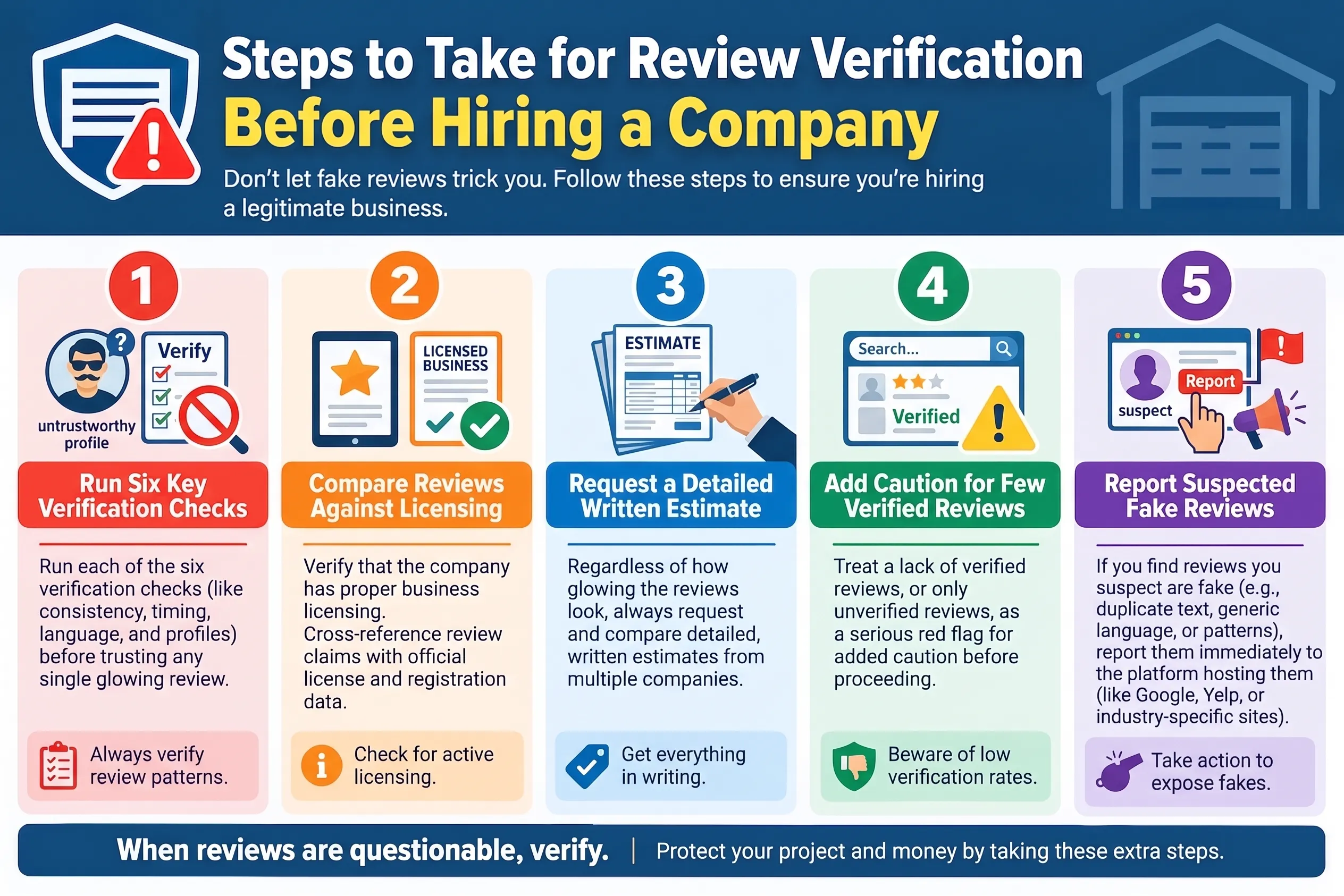
Running these checks before scheduling a garage door installation or repair helps protect you from decisions based on manufactured praise.
Putting this verification process into practice involves:
- Running each of the six checks before trusting a glowing review
- Comparing verified reviews against a company’s proper licensing
- Requesting a detailed estimate regardless of how positive reviews look
- Treating a lack of verified reviews as a reason for added caution
- Reporting a suspected fake review to the platform hosting it
Confirming a review through these steps protects against legitimate repair companies losing business to competitors using fabricated praise.
Genuine Reviews Reveal Themselves Once You Know What to Check
Confirming a review is genuine before trusting it closes the exact gap scammers depend on most, the space between polished praise and real service history. A homeowner who checks these signals protects both a repair budget and a working garage door from an avoidable mistake.
Affordable Garage Door Repairs of Indianapolis, LLC has earned its reputation across Indianapolis, IN, through verified customer feedback and transparent pricing on every completed job. Contact us or give us a call today, and let our team show exactly what an honestly reviewed service call looks like in practice.